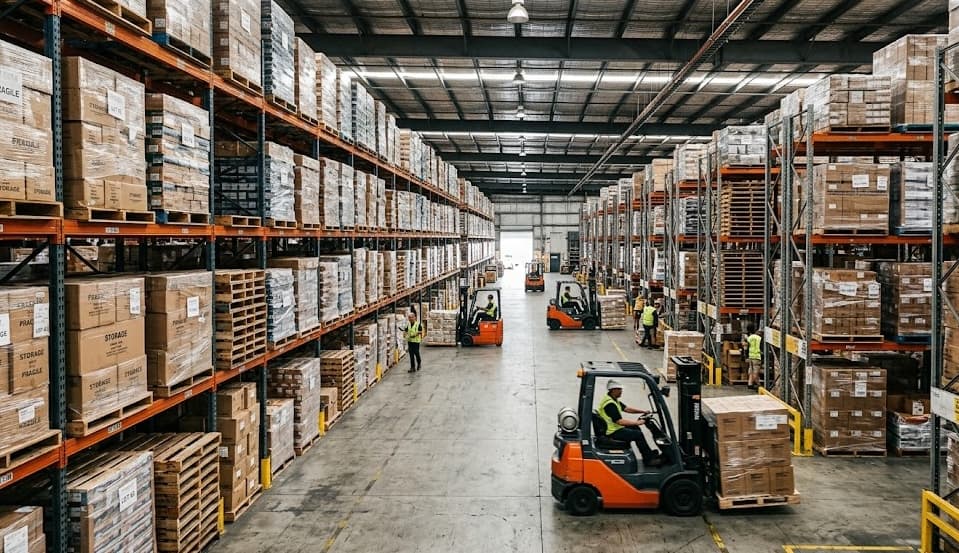
Plastic Pallets — Durable & Reusable
Hygienic, consistent, and export-friendly. Plastic pallets deliver unmatched durability for demanding applications in food, pharmaceutical, and international logistics.
Get a Quote on Plastic Pallets
Tell us your application, quantity, and any special requirements. We carry nestable, stackable, and rackable designs.
The Benefits of Plastic Pallets
Plastic pallets have steadily gained market share over the past two decades, and for good reason. Where wood pallets are the workhorse of general freight, plastic pallets excel in specialized environments that demand hygiene, consistency, and longevity. Industries like pharmaceutical manufacturing, food processing, cleanroom operations, and international export increasingly specify plastic pallets as their platform of choice.
Unlike wood, plastic pallets do not absorb moisture, harbor bacteria, or shed splinters. They maintain their exact dimensions and weight throughout their service life — there is no warping, swelling, or shrinkage. This dimensional consistency is critical for automated warehouse systems, where even small variations can cause jams, misfeeds, and downtime on conveyor lines and automated storage and retrieval systems (AS/RS).
At Ace Pallet Service, we stock a range of plastic pallet types and can source specialty designs for virtually any application. Whether you need a lightweight nestable pallet for one-way export shipments or a heavy-duty rackable pallet for multi-year use in a distribution center, we have options that fit your budget and performance requirements.
Durability
Plastic pallets last 10x longer than wood on average. They resist impact, moisture, chemicals, and UV exposure without degradation. A single plastic pallet can make over 200 trips before retirement.
Hygiene
Non-porous surfaces can be washed, sanitized, and steam-cleaned. No wood fibers to absorb contaminants. Meets FDA and USDA requirements for food-contact surfaces when properly maintained.
Consistency
Every pallet is identical in weight, dimension, and performance. No natural variation like wood grain. Eliminates automated system jams caused by dimensional inconsistency.
No Splinters or Nails
Eliminates injury risk from splinters, protruding nails, and broken boards. Reduces workplace injury claims and product damage from nail punctures. A safer working environment for warehouse staff.
Export-Friendly
Plastic pallets are exempt from ISPM-15 heat treatment requirements because they cannot harbor wood-boring insects. This eliminates treatment costs and customs delays for international shipments.
100% Recyclable
At end of life, plastic pallets are ground into regrind material and molded into new pallets or other products. Zero waste to landfill. The closed-loop recyclability offsets the higher initial cost over time.
Plastic Pallet Material Types
Not all plastic pallets are created equal. The type of plastic used in manufacturing determines the pallet's strength, weight, temperature tolerance, and cost. Here is a breakdown of the three primary materials you will encounter.
HDPE (High-Density Polyethylene)
HDPE is the most common material for plastic pallets. It offers an excellent balance of strength, impact resistance, and chemical resistance at a moderate cost. HDPE pallets tolerate a wide temperature range and resist cracking in cold environments, making them the standard choice for cold storage and freezer applications. The material is naturally resistant to mold, mildew, and bacterial growth.
Key Properties:
- • Temperature range: -40 deg F to 160 deg F
- • Chemical resistance: excellent
- • Impact resistance: very good
- • Rigidity: moderate (semi-flexible)
- • UV resistance: good (with additives)
- • Common applications: cold storage, food processing, general warehouse
PP (Polypropylene)
Polypropylene pallets are lighter and more rigid than HDPE, making them the preferred choice for high-temperature applications and racking environments where stiffness is critical. PP has a higher melting point than HDPE, so it performs better in warm warehouse environments and can tolerate brief exposure to steam cleaning. However, PP is more brittle at low temperatures and is not recommended for freezer storage below 0 degrees Fahrenheit.
Key Properties:
- • Temperature range: 0 deg F to 210 deg F
- • Chemical resistance: excellent
- • Impact resistance: good (brittle when cold)
- • Rigidity: high (stiffer than HDPE)
- • UV resistance: moderate
- • Common applications: racking, high-temp environments, pharmaceutical
Recycled Blend (rHDPE/rPP)
Recycled-blend pallets are manufactured from post-consumer or post-industrial recycled plastics, typically a mix of HDPE and PP with other compatible resins. They cost less than virgin-material pallets and deliver adequate performance for many applications, particularly one-way export shipping, internal transfers, and closed-loop systems where cosmetic appearance is not critical. The material may have slight color variations batch to batch.
Key Properties:
- • Temperature range: -20 deg F to 150 deg F
- • Chemical resistance: good
- • Impact resistance: moderate
- • Rigidity: moderate
- • UV resistance: variable
- • Common applications: export, internal logistics, cost-sensitive programs
Understanding Static, Dynamic & Racking Load Ratings
Plastic pallets are rated for three types of load conditions. Understanding the difference is essential for selecting a pallet that will perform safely in your specific application.
Static Load
The maximum weight the pallet can support when resting on a flat, solid surface (like a warehouse floor) with the load evenly distributed. Static loads are the highest rating because the full surface of the pallet is supported from below.
Typical Ratings:
- Nestable: 2,000 -- 5,000 lbs
- Stackable: 5,000 -- 15,000 lbs
- Rackable: 15,000 -- 30,000 lbs
Dynamic Load
The maximum weight the pallet can support while being lifted and transported by a forklift or pallet jack. Dynamic loads are lower than static loads because the pallet must resist bending forces as it is lifted from two points (the fork tines) rather than being supported across its full surface.
Typical Ratings:
- Nestable: 1,000 -- 2,500 lbs
- Stackable: 2,000 -- 5,000 lbs
- Rackable: 2,500 -- 5,000 lbs
Racking Load
The maximum weight the pallet can support when placed on pallet racking beams with no center support. The pallet must span the gap between beams without excessive deflection. This is the most demanding load condition and only heavy-duty rackable pallets are rated for it.
Typical Ratings:
- Nestable: not rated for racking
- Stackable: not rated for racking
- Rackable: 1,500 -- 2,800 lbs
Nestable, Stackable & Rackable: A Detailed Comparison
Nestable Pallets
Nestable plastic pallets feature a nine-leg or perimeter-base design that allows empty pallets to nest inside each other. This dramatically reduces the space required for empty pallet storage and return shipping. A stack of 25 nestable pallets occupies roughly the same height as 6 stacked standard pallets.
These pallets are the lightest plastic option, typically weighing 12 to 18 lbs, making them ideal for air freight and one-way export shipments where the pallet will not be returned. They support static loads of 2,000 to 5,000 lbs depending on the model.
Best For:
- • One-way export shipments
- • Air freight (weight-sensitive)
- • Space-constrained storage
- • High-volume return logistics
Limitations:
- • Cannot be used on pallet racking
- • Lower load capacity than other types
- • Less stable when floor-stacked loaded
Stackable Pallets
Stackable plastic pallets have a flat bottom deck that allows loaded pallets to be safely stacked on top of each other in storage or during transit. They provide better load distribution than nestable pallets and are built for multi-trip use within closed-loop supply chains.
Weighing between 20 and 35 lbs, stackable pallets handle static loads of 5,000 to 10,000 lbs and dynamic loads of 2,000 to 5,000 lbs. Their consistent footprint and flat surface make them an excellent choice for automated handling systems.
Best For:
- • Closed-loop distribution
- • Floor stacking in warehouses
- • Automated conveyor systems
- • Food and beverage operations
Limitations:
- • Does not nest (takes more empty storage space)
- • Not designed for unsupported racking spans
- • Heavier than nestable models
Rackable Pallets
Rackable plastic pallets are the heavy-duty option, engineered to support loads when placed on pallet racking systems where the pallet spans the rack beams with no center support. This requires significantly more structural rigidity than floor stacking, and rackable pallets are reinforced with internal steel bars or high-density structural ribs.
These pallets handle racking loads of 2,000 to 2,800 lbs (unsupported span), static loads of up to 30,000 lbs, and dynamic loads of up to 5,000 lbs. They weigh 40 to 60 lbs and represent the premium tier of plastic pallets.
Best For:
- • Selective pallet racking
- • AS/RS automated systems
- • Heavy or high-value loads
- • Multi-year warehouse use
Limitations:
- • Highest cost per unit
- • Heaviest plastic pallet type
- • Does not nest for return shipping
| Feature | Nestable | Stackable | Rackable |
|---|---|---|---|
| Weight | 12 -- 18 lbs | 20 -- 35 lbs | 40 -- 60 lbs |
| Static Load | 2,000 -- 5,000 lbs | 5,000 -- 15,000 lbs | 15,000 -- 30,000 lbs |
| Dynamic Load | 1,000 -- 2,500 lbs | 2,000 -- 5,000 lbs | 2,500 -- 5,000 lbs |
| Racking Load | Not rated | Not rated | 1,500 -- 2,800 lbs |
| Price Range | $15 -- $25 | $25 -- $45 | $45 -- $70+ |
| Nesting Ratio | 4:1 to 6:1 | N/A | N/A |
| Lifespan | 50 -- 100 trips | 100 -- 200 trips | 200 -- 250+ trips |
FDA, Pharmaceutical & Food Safety Compliance
Regulated industries demand packaging materials that meet strict hygiene, traceability, and contamination-prevention standards. Plastic pallets are purpose-built for these environments.
FDA & USDA Compliance
The FDA requires that materials used in food-contact environments be non-absorbent, cleanable, and free of substances that could migrate into food products. Plastic pallets made from FDA-compliant HDPE or PP resins meet these requirements inherently. Their non-porous surface prevents bacterial harboring, and they can be washed and sanitized between uses to eliminate cross-contamination risk.
The USDA has similar requirements for facilities under their jurisdiction, particularly meat and poultry processing plants. Plastic pallets eliminate the splinters, mold, and insect harborage risks associated with wood pallets in these sensitive environments.
For FSMA (Food Safety Modernization Act) compliance, plastic pallets support your preventive controls plan by providing a packaging platform that is easily cleaned, inspected, and documented in your food safety records.
Pharmaceutical & GMP Environments
Pharmaceutical manufacturing facilities operating under GMP (Good Manufacturing Practice) regulations maintain strict controls on all materials that enter production areas. Wood pallets are typically prohibited in GMP zones because they shed fibers, harbor mold spores, and cannot be reliably sanitized.
Plastic pallets are the standard solution. They can be steam-cleaned, pressure-washed, or passed through automated wash stations between each use. Their smooth, non-porous surfaces are easy to visually inspect for contaminants. Many pharmaceutical companies use color-coded plastic pallets to segregate different product types, stages of manufacturing, or quarantine statuses.
We supply cleanroom-compatible plastic pallets that meet ISO Class 7 and Class 8 particulate standards, with smooth surfaces, no crevices, and no marking areas where particles can accumulate. Documentation including material safety data sheets and certificates of compliance are available on request.
Export Advantages: No ISPM-15 Required
One of the most compelling reasons businesses switch from wood to plastic pallets for international shipments is ISPM-15 exemption. Because plastic cannot harbor the wood-boring insects and pathogens that ISPM-15 was designed to prevent, plastic pallets are completely exempt from the regulation. This eliminates several costs and risks from your export logistics.
Costs You Eliminate with Plastic:
- ✓ Heat treatment fees ($1.50 -- $3.00 per pallet)
- ✓ ISPM-15 certification and stamping costs
- ✓ Lead time delays for treatment scheduling
- ✓ Documentation and record-keeping burden
- ✓ Risk of customs holds for non-compliant stamps
- ✓ Fines and re-treatment costs if stamps fade or are unreadable
Additional Export Benefits:
- ✓ Lighter weight reduces air and ocean freight costs
- ✓ Consistent dimensions fit container configurations precisely
- ✓ No moisture content variability (wood pallets can be rejected for high MC)
- ✓ Accepted in all countries without phytosanitary inspection
- ✓ No risk of mold growth during ocean transit (a common issue with wood)
- ✓ Nestable pallets reduce return shipping costs by up to 75%
Lifecycle Cost Analysis: Plastic vs. Wood
The sticker price of a plastic pallet is higher than wood, but the total cost of ownership over the pallet's lifetime tells a different story. Here is a simplified cost-per-trip analysis that illustrates why plastic pallets often deliver a lower total cost for operations that reuse pallets.
Wood Pallet (Grade B, 48x40)
- Purchase price$7.00
- Expected trips before end of life12 trips
- Average repair cost per trip$0.75
- Total cost over lifecycle$16.00
- Cost per trip$1.33
Plastic Pallet (Stackable, 48x40)
- Purchase price$35.00
- Expected trips before end of life150 trips
- Repair cost per trip$0.00
- Total cost over lifecycle$35.00
- Cost per trip$0.23
This example assumes a closed-loop supply chain where pallets are returned. For one-way shipments where pallets are not returned, wood pallets typically deliver lower total cost. Contact us for a custom analysis based on your specific use case.
Cleaning & Sanitization Methods
One of plastic's key advantages is that it can be thoroughly cleaned and sanitized for reuse. Here are the most common methods, ranked from least to most intensive.
Pressure Washing
High-pressure water (1,500 -- 3,000 PSI) removes surface debris, dirt, and loose contaminants. Suitable for general warehouse use where food-grade sanitization is not required. Quick and cost-effective for large pallet volumes.
Hot Water / Detergent Wash
Pallets are run through an automated wash station using hot water (140 -- 180 deg F) with food-grade detergent. This removes organic residue, grease, and most surface bacteria. The standard cleaning method for food processing facilities.
Chemical Sanitization
After washing, pallets are treated with a sanitizing agent (quaternary ammonium, peracetic acid, or sodium hypochlorite solution). This kills remaining bacteria and meets FDA requirements for food-contact surface sanitization. Pallets are rinsed and air-dried before returning to service.
Steam Cleaning
High-temperature steam (212 deg F and above) is applied directly to pallet surfaces. Steam cleaning is the most effective sanitization method and is used in pharmaceutical manufacturing and high-risk food processing. It kills bacteria, viruses, and spores without chemical residue.
Color Coding Options & Uses
Plastic pallets are available in a range of standard colors, and custom colors can be specified for large orders. Color coding is a powerful visual management tool used across many industries to enhance warehouse organization, safety, and regulatory compliance.
Black
The most common plastic pallet color. Black pallets are standard for general warehouse use, distribution, and applications where color coding is not required. Black pigmentation also provides UV protection for outdoor storage.
Blue
Widely used in food and pharmaceutical industries because blue is easily detectable against most product colors if a pallet chip or fragment contaminates a production line. Many food safety programs mandate blue pallets for this reason.
Red
Often used to designate quarantine zones, rejected products, or hazardous materials. In some facilities, red pallets indicate pallets that need inspection or repair before returning to service.
Yellow
Common in safety-critical zones and chemical handling areas. Yellow pallets may designate specific production lines, export-only inventory, or allergen-segregated products in food manufacturing.
Green
Used to designate approved or released products, organic or sustainability-certified goods, or specific customer accounts in multi-tenant warehouse operations.
White / Light Gray
Preferred in cleanroom and pharmaceutical environments where cleanliness is visually verified. Any contamination is immediately visible against the light surface. Also used in retail-facing applications.
Temperature Tolerance Ranges
Operating temperature is a critical consideration when selecting plastic pallets for cold storage, freezer, or high-temperature environments. Different plastic materials behave differently at temperature extremes. Below are the operating ranges for the three main material types.
HDPE
-40 deg F to 160 deg F
Best for freezer and cold storage. Retains impact resistance at sub-zero temperatures. The standard material for cold chain logistics.
Polypropylene
0 deg F to 210 deg F
Best for warm environments and autoclaving. Higher melting point than HDPE. Do not use in deep freezer applications -- PP becomes brittle below 0 deg F.
Recycled Blend
-20 deg F to 150 deg F
Narrower operating range than virgin materials. Adequate for climate-controlled warehouses and general logistics. Not recommended for extreme temperature applications.
Plastic vs. Wood Pallets
Both pallet types have their place. The right choice depends on your application, budget, and operational requirements. Here is how they compare across key criteria.
| Criteria | Plastic | Wood |
|---|---|---|
| Initial Cost | Higher ($15 -- $70+) | Lower ($5 -- $25) |
| Lifespan | 200+ trips | 10 -- 20 trips (repairable) |
| Cost Per Trip | Often lower long-term | Higher when factoring repairs |
| Weight | 12 -- 60 lbs | 30 -- 75 lbs |
| Hygiene | Washable, non-porous | Absorbs moisture, can harbor bacteria |
| Repairability | Not field-repairable | Easily repaired with basic tools |
| Export Compliance | ISPM-15 exempt | Requires heat treatment |
| Recyclability | 100% recyclable into new products | Recyclable into mulch, fuel, etc. |
| Load Capacity | Up to 30,000 lbs static | Up to 2,800 lbs static (standard) |
| Availability | Lead times may apply | Widely available, immediate stock |
Not sure which is right for your operation? Our team can help you analyze the total cost of ownership for both options based on your specific use case.
Environmental Lifecycle Analysis
At first glance, plastic might not seem like the eco-friendly choice. But when you look at the full lifecycle, the picture changes. A single plastic pallet replaces 10 to 20 wood pallets over its service life, significantly reducing the total volume of raw materials consumed. At end of life, plastic pallets are 100% recyclable — the material is ground into pellets and remolded into new pallets or other durable goods.
Many of the plastic pallets we supply are manufactured from post-consumer recycled HDPE (high-density polyethylene), meaning they are already on their second or third life as a material. This closed-loop manufacturing process reduces virgin plastic consumption and keeps material out of landfills.
A lifecycle assessment (LCA) published by the Virginia Tech Center for Packaging and Unit Load Design found that when used in a closed-loop system of 100+ trips, plastic pallets generate fewer total greenhouse gas emissions than an equivalent number of wood pallet trips. The key factors are the elimination of repair waste, reduced transportation weight, and the recyclability of the material at end of life.
At Ace Pallet Service, we accept returns of damaged plastic pallets and coordinate recycling through our material recovery partners. When your plastic pallets reach end of life, we ensure they are properly recycled — never landfilled. This commitment to responsible end-of-life management is part of our broader zero-waste mission at 7236 Murthum Ave, Warren, MI 48092.
More reuse cycles than wood pallets
Recyclable at end of life
Waste generated during use (no splinters, no broken boards)
Lighter than comparable wood pallets
Trips per pallet before retirement
Where Plastic Pallets Excel
Pharmaceutical & Medical
Pharmaceutical companies require GMP-compliant environments throughout their supply chains. Plastic pallets meet these standards by providing a non-porous, washable surface that resists microbial growth. They eliminate the contamination risks posed by wood fibers, mold spores, and insect debris. Many pharmaceutical facilities mandate plastic pallets for all incoming and outgoing shipments to maintain cleanroom integrity and audit compliance.
Food & Beverage
Food processing and cold storage environments are particularly harsh on wood pallets. Moisture, temperature swings, and wash-down procedures accelerate wood degradation and create food safety risks. Plastic pallets withstand these conditions without warping, rotting, or harboring pathogens. They can be run through industrial wash stations and returned to service immediately, supporting HACCP and FSMA compliance requirements.
Export & International
International shippers face ISPM-15 regulations that require all solid wood packaging to be heat-treated or fumigated. Plastic pallets are exempt from these regulations entirely, eliminating treatment costs, documentation requirements, and customs delays at international ports. For companies shipping to regions with strict phytosanitary enforcement (EU, Australia, China), plastic pallets simplify compliance and reduce the risk of costly shipment holds.
Ready to Switch to Plastic?
Our team can help you evaluate plastic pallets for your operation, calculate ROI, and source the right pallet type for your application. Contact us for a free consultation and quote.
Ace Pallet Service · 7236 Murthum Ave, Warren, MI 48092