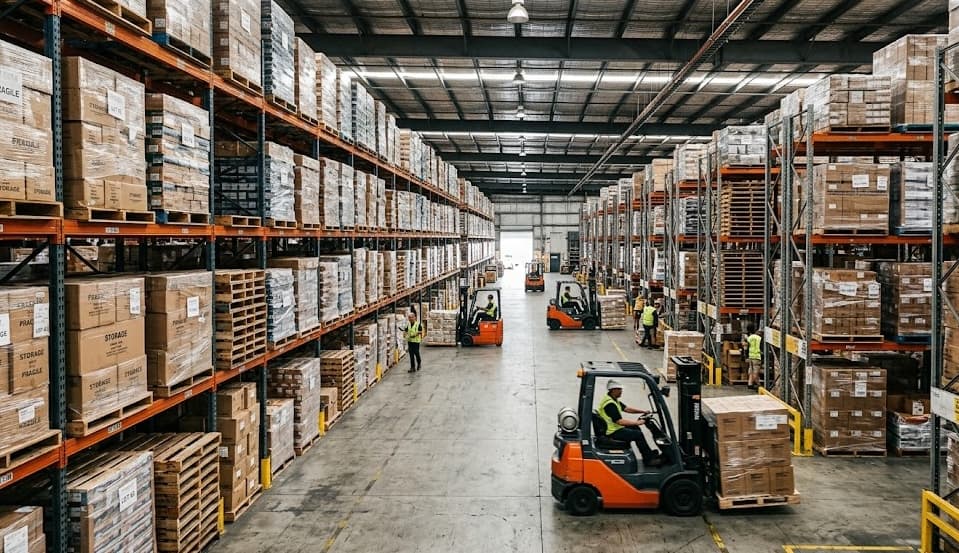
Pallet Management Programs
Outsource your entire pallet operation to Ace Pallet Service. We handle pickup, sorting, repair, recycling, supply replenishment, and reporting — so your team can focus on what they do best.
Start a Management Program
Tell us about your facility, pallet volume, and current challenges. We will design a custom management program and provide a detailed proposal.
Four Tiers to Match Your Scale
We offer four program tiers ranging from basic pickup and supply to full-service enterprise management with technology integration and dedicated teams. Choose the level that matches your volume and complexity.
Basic
200-500 pallets/monthAn entry-level program for businesses that want to outsource pallet removal and get basic supply management without the full suite of optimization services. Basic programs are ideal for facilities just beginning to formalize their pallet operations.
Includes
- ✓Scheduled weekly pickups
- ✓Basic supply replenishment (you order, we deliver)
- ✓Monthly volume summary report
- ✓Phone and email support
- ✓Standard pricing (volume discounts apply)
Available at higher tiers
- —Dedicated account manager
- —On-site sorting
- —Quarterly business reviews
- —Waste reduction consulting
Standard
500-1,500 pallets/monthOur most popular program tier. Standard includes everything in Basic plus dedicated account management, on-site sorting, and more detailed reporting. Most businesses at this volume level see the best return on investment at the Standard tier.
Includes
- ✓Multiple pickups per week
- ✓Automatic supply replenishment based on par levels
- ✓Dedicated account manager
- ✓On-site sorting at your facility
- ✓Monthly detailed report with cost analysis
- ✓Semi-annual business review
- ✓Volume-based pricing with quarterly adjustment
Available at higher tiers
- —Daily pickup capability
- —Quarterly waste reduction consulting
- —WMS/ERP integration
Premium
1,500-5,000 pallets/monthPremium programs add daily service capability, proactive waste reduction consulting, and integration with your warehouse management systems. This tier is designed for large operations where pallet costs are a significant line item and optimization has measurable P&L impact.
Includes
- ✓Daily pickup and delivery capability
- ✓Automatic supply replenishment with demand forecasting
- ✓Senior dedicated account manager
- ✓On-site sorting with detailed tracking
- ✓Monthly report with full cost analysis and benchmarks
- ✓Quarterly business reviews with optimization recommendations
- ✓Waste reduction consulting and implementation support
- ✓Priority rush service at reduced surcharges
Available at higher tiers
- —Custom WMS/ERP data integration
- —Multi-site program management
Enterprise
5,000+ pallets/monthEnterprise is our most comprehensive program, built for large multi-facility operations that require a custom-engineered pallet management solution. Enterprise clients receive a dedicated team, technology integration, and strategic partnership-level engagement.
Includes
- ✓Unlimited pickup and delivery frequency
- ✓Demand forecasting with predictive inventory management
- ✓Dedicated account team (manager + operations coordinator)
- ✓On-site sorting with dedicated crew allocation
- ✓Custom reporting dashboard with real-time data access
- ✓Monthly business reviews with executive summary
- ✓Full waste reduction consulting and change management
- ✓WMS/ERP integration for automated ordering
- ✓Multi-site program management with consolidated billing
- ✓Annual strategic planning session
- ✓Custom SLA with performance guarantees
KPI Dashboard: What We Track
You cannot manage what you do not measure. Our monthly reports track these key performance indicators so you always know exactly how your pallet program is performing.
Cost Metrics
Cost per pallet (blended)
Average cost across all pallet types and services, calculated monthly
Total program cost
All-in monthly spend including supply, repair, recycling, and transportation
Cost per shipment
Pallet cost allocated per outbound shipment for activity-based costing
Year-over-year cost trend
Monthly comparison to the same period last year showing improvement trajectory
Operational Metrics
Pallets collected
Total pallets picked up from your facility, broken down by condition and grade
Pallets repaired and returned
Number of pallets that went through repair and came back to your inventory
Pallets recycled
Number of pallets that entered the recycling stream for material recovery
Supply replenishment volume
Number of replacement pallets delivered, by grade and size
Efficiency Metrics
Repair rate
Percentage of collected pallets that were economically repairable vs. recycled
Reuse rate
Percentage of inbound pallets identified as immediately reusable during on-site sorting
Damage rate
Percentage of your pallet inventory that becomes damaged per cycle — a key indicator of handling quality
Cycle count accuracy
Verification that physical pallet counts match system records, measured quarterly
Sustainability Metrics
Waste diversion rate
Percentage of pallets diverted from landfill through repair, recycling, or reuse
Tons of wood diverted
Weight of wood material kept out of landfills, calculated from recycling volumes
Estimated carbon savings
CO2-equivalent emissions avoided through recycling vs. landfill disposal
Virgin material offset
Estimated board feet of new lumber avoided through repair and recycled-content pallets
Inventory Optimization Strategies
Most businesses either carry too much pallet inventory (wasting space and capital) or too little (causing stockouts and delays). Our optimization strategies find the right balance.
Par Level Management
We establish minimum and maximum pallet inventory levels at your facility based on your throughput data. When inventory drops to the minimum (par) level, an automatic replenishment order triggers. When inventory reaches the maximum, we scale back deliveries. Par levels are calibrated during onboarding and adjusted quarterly based on actual usage patterns.
Grade Optimization
Not every application requires the same pallet grade. We analyze your outbound shipping requirements and match the most cost-effective pallet grade to each use case. Shipments to high-profile retail customers might require Grade A, while internal warehouse transfers can use Grade C. This grade optimization typically saves 15-25% on pallet purchase costs without affecting shipment quality.
Right-Sizing Inventory
Many businesses carry more pallet inventory than they need, tying up capital and consuming dock space. We analyze your weekly pallet consumption rate and recommend an optimal on-hand inventory that balances supply security against carrying costs. Most clients can reduce their on-site pallet inventory by 20-30% without increasing stockout risk.
Seasonal Pre-Positioning
If your business has predictable seasonal surges (holiday shipping, harvest season, automotive model changeovers), we pre-position extra inventory at your facility or at our Warren yard before the surge begins. This ensures uninterrupted pallet supply during your busiest periods without requiring emergency purchases at peak-season pricing.
Demand Forecasting Methodology
Running out of pallets is preventable. Our demand forecasting methodology combines historical data, seasonal adjustment, and direct customer intelligence to predict your needs before they arise.
Historical Usage Analysis
We analyze 12-24 months of your pallet usage data to identify baseline consumption rates, seasonal patterns, and trend lines. This historical baseline forms the foundation of our demand forecast. The more data we have, the more accurate our predictions become.
Seasonal Adjustment Factors
Michigan businesses experience predictable seasonal demand variations. We apply adjustment factors based on your industry's seasonal patterns (e.g., Q3 peak for retail, Q2 surge for construction, Q4 push for automotive). These factors modify the baseline forecast to account for known seasonal swings.
Customer Input Integration
No algorithm replaces direct customer knowledge. Your account manager regularly checks in to learn about upcoming promotions, new product launches, facility expansions, or other events that would change pallet demand. This human intelligence is layered on top of algorithmic forecasts for maximum accuracy.
Rolling Forecast Updates
Our demand forecasts are not set-it-and-forget-it. We update forecasts monthly using the most recent actual consumption data. If your business is trending above or below the forecast, we adjust replenishment orders in real time to keep inventory aligned with actual demand.
WMS & ERP Integration
For Premium and Enterprise tier clients, we integrate our pallet management data directly with your existing warehouse management and enterprise resource planning systems.
Warehouse Management Systems (WMS)
For Premium and Enterprise clients, we can integrate our pallet management data with your WMS. This allows your system to see current pallet inventory levels, trigger automatic reorder requests, and track pallet costs at the SKU or shipment level. Integration is typically accomplished through scheduled file transfers (CSV/EDI) or API connections.
Compatible with: SAP WM, Oracle WMS, Manhattan Associates, Blue Yonder, HighJump, and most cloud-based WMS platforms
Enterprise Resource Planning (ERP)
Our reporting data can feed into your ERP system for seamless cost allocation, purchase order automation, and financial reporting. Pallet costs are mapped to your cost centers, and invoicing data flows directly into accounts payable. This eliminates manual data entry and ensures pallet spend is accurately captured in your financial systems.
Compatible with: SAP ERP, Oracle ERP, Microsoft Dynamics, NetSuite, Epicor, and other major ERP platforms
Sustainability Reporting Platforms
Our environmental impact data (waste diversion, carbon savings, material recovery volumes) can be exported in formats compatible with major sustainability reporting frameworks including GRI, CDP, and SASB. Enterprise clients receive pre-formatted data packages that plug directly into their ESG reporting workflows.
Compatible with: GRI Standards, CDP Climate, SASB, custom ESG dashboards
What Our Program Includes
Every Ace Pallet Management program is tailored to the client, but these core services form the foundation of every engagement.
Regular Pickup Schedules
We establish a standing pickup cadence that matches your pallet throughput — daily, multiple times per week, weekly, or bi-weekly. Your dock stays clear, your pallets are managed, and you never have to call to request a pickup. Schedules are adjusted seasonally as your volume changes.
Inventory Tracking
We track every pallet that enters and leaves your facility through our management program. You receive monthly reports showing pallet inflow, outflow, repair rates, recycling volumes, and net cost. This data gives you visibility into a cost center that most businesses never measure.
On-Site Sorting
Our crew can sort pallets at your facility, separating reusable pallets from those needing repair and those destined for recycling. On-site sorting reduces the number of pallets hauled to our facility, lowers freight costs, and puts reusable pallets back into your inventory immediately.
Waste Reduction Consulting
Our operations team analyzes your pallet flow to identify opportunities to reduce damage, extend pallet life, and minimize waste. Recommendations might include changes to handling procedures, pallet specifications, or storage methods. Many clients reduce their pallet waste by 20-40% after implementing our suggestions.
Dedicated Account Manager
Every management program client gets a single point of contact who knows your operation inside and out. Your account manager handles scheduling changes, volume fluctuations, special requests, and issue resolution. You never get passed around a call center — you talk to the same person every time.
Cost Optimization Analysis
We review your total pallet spend quarterly and recommend adjustments. This might mean switching from new pallets to repaired Grade B for certain applications, consolidating suppliers, adjusting order frequencies, or renegotiating pricing based on updated volume data. The goal is continuous cost reduction without sacrificing quality.
Monthly Reporting
Every client receives a detailed monthly report covering: pallets collected, pallets repaired and returned, pallets recycled, materials recovered, cost per pallet, total program cost, year-over-year comparisons, and sustainability metrics including tons of wood diverted from landfills and estimated carbon savings.
Supply Replenishment
When your pallet inventory runs low, we replenish it automatically based on par levels you define. There is no need to place orders — your account manager monitors your usage patterns and ensures replacement pallets arrive before you need them. This prevents production delays caused by pallet shortages.
Cost Reduction Case Studies
Real numbers from real clients. These case studies show how our management programs deliver measurable cost savings across different industries and facility sizes in Southeast Michigan.
Automotive Parts Manufacturer — Macomb County
3,200 pallets/monthChallenge
Buying all new pallets at $14 each for outbound shipments while paying $2,800/month to dispose of inbound pallets that accumulated on the dock.
Solution
Implemented a Standard tier program with on-site sorting. Identified that 40% of inbound pallets were reusable for outbound shipping without any repair. An additional 30% required minor repair. Only 30% went to recycling.
| Metric | Before | After | Impact |
|---|---|---|---|
| Monthly pallet purchase cost | $44,800 | $22,400 | $22,400/mo |
| Monthly disposal cost | $2,800 | $0 | $2,800/mo |
| Monthly program fee | N/A | $8,600 | -$8,600/mo |
| Net monthly savings | $16,600/mo |
Food Distribution Center — Oakland County
5,800 pallets/monthChallenge
Using only new Grade A pallets at $16 each due to food-grade requirements. No recycling program; damaged pallets were dumpster-disposed at $4,200/month.
Solution
Implemented a Premium tier program. Established a dual-grade system: Grade A for outbound customer shipments, repaired Grade B for internal warehouse transfers and staging. Created a closed-loop recycling program for all damaged pallets.
| Metric | Before | After | Impact |
|---|---|---|---|
| Monthly pallet purchase cost | $92,800 | $58,000 | $34,800/mo |
| Monthly disposal cost | $4,200 | $0 | $4,200/mo |
| Monthly program fee | N/A | $14,500 | -$14,500/mo |
| Net monthly savings | $24,500/mo |
E-Commerce Fulfillment Center — Wayne County
1,800 pallets/monthChallenge
Rapid growth outpacing pallet management capacity. Three different vendors providing supply, removal, and repair with no coordination. Frequent stockouts causing shipment delays. Total monthly spend of $18,500 with poor visibility into costs.
Solution
Consolidated all pallet services under a Standard tier program. Implemented par-level management with automatic replenishment. Established twice-weekly pickups and on-site sorting to maximize repair and reuse.
| Metric | Before | After | Impact |
|---|---|---|---|
| Total monthly pallet spend | $18,500 | $12,400 | $6,100/mo |
| Pallet-related shipping delays | 4-6 per month | 0 | Eliminated |
| Vendors managed | 3 | 1 | Simplified |
| Administrative hours/month | 12 hours | 2 hours | 10 hours/mo |
Industries That Benefit Most
Pallet management programs deliver the greatest value to businesses that handle high volumes of pallets and lack the internal resources to manage them efficiently.
Warehouses
Warehouses cycle through large volumes of pallets and often lack the space or personnel to manage them. Our program keeps the dock clear, recovers value from damaged pallets, and ensures a steady supply of quality replacements.
Distribution Centers
DCs handle pallets from dozens of suppliers in varying conditions. Our on-site sorting separates the good from the damaged, repairs what can be saved, and recycles the rest — all without requiring your team to touch a pallet.
Manufacturers
Manufacturing plants need reliable pallet supply for outbound shipping and often accumulate inbound pallets with no plan for disposal. We solve both problems: supplying outbound pallets and removing inbound empties on a single truck.
Retailers
Retail locations generate pallet waste daily but lack the equipment and space to manage it. Our compact pickup schedules and small-load capability keep retail backrooms clear and compliant with fire safety codes.
Third-Party Logistics (3PLs)
Logistics providers manage pallets for multiple clients, each with different requirements. Our program simplifies this by providing a single pallet management solution that covers all clients under one contract with detailed per-client reporting.
Quarterly Business Reviews
Every Standard, Premium, and Enterprise client receives a structured quarterly business review. These sessions ensure your program is delivering promised results and continuously improving.
Financial Performance Review
We present a quarter-over-quarter analysis of your total pallet spend, cost per pallet, cost per shipment, and program ROI. This section compares actual costs against your pre-program baseline and against the projections in your original proposal to verify that promised savings are being delivered.
Operational Performance Review
Analysis of pickup and delivery reliability (on-time rates), pallet quality metrics (defect rates on supplied pallets), repair rates, and recycling volumes. We identify any operational issues that occurred during the quarter and present corrective actions taken or recommended.
Optimization Recommendations
Based on the quarter's data, we present specific recommendations for further cost reduction or service improvement. These might include grade changes for certain applications, schedule adjustments, inventory level changes, or facility-level process improvements. Each recommendation includes an estimated financial impact.
Sustainability Update
Quarterly sustainability metrics including waste diversion rate, tons of wood recycled, estimated carbon savings, and progress toward any annual sustainability targets. This data is formatted for direct inclusion in your corporate sustainability reports.
Forward Planning
We discuss known upcoming changes — seasonal volume shifts, facility expansions, new product launches, or market trends — and adjust the program plan accordingly. This proactive planning prevents surprises and ensures your pallet program adapts before problems occur.
Action Items and Commitments
Every QBR concludes with a documented list of action items, owners, and deadlines. These items are tracked in our project management system, and your account manager provides status updates between reviews. Nothing falls through the cracks.
Dedicated Account Management Structure
When you partner with Ace Pallet Service, you are not just getting a vendor — you are getting a dedicated team. Here is who supports your account and what each role is responsible for.
Account Manager
Your primary day-to-day contact. Handles all scheduling, ordering, issue resolution, and reporting. Available by phone, email, and text during business hours. Conducts site visits at least monthly for Standard tier and above.
1 account manager per 8-12 managed accounts
Operations Coordinator
Manages dispatch logistics for your pickups and deliveries. Coordinates driver schedules, resolves day-of-delivery issues, and ensures on-time performance. Works closely with your dock team on scheduling specifics. Available for Premium and Enterprise tiers.
1 coordinator per 15-20 accounts
Program Director
Senior oversight for all managed accounts. Reviews monthly performance reports, approves optimization recommendations, and escalates complex issues. Participates in quarterly business reviews for Premium and Enterprise clients. Serves as an escalation point when your account manager cannot resolve an issue.
1 director overseeing the full program
On-Site Crew Lead
For accounts with on-site sorting, the crew lead manages sorting operations at your facility. Supervises pallet grading, coordinates with your dock team, and maintains sorting quality standards. Reports daily counts to your account manager.
Assigned per facility as needed
Onboarding Process Timeline
From initial facility assessment to fully optimized program, our onboarding process takes approximately 12 weeks. Here is what happens at each stage.
Discovery & Assessment
- ✓Facility visit and dock inspection
- ✓Current pallet flow analysis (inbound, outbound, damaged)
- ✓Interview with dock supervisors and warehouse management
- ✓Review of current pallet vendors, contracts, and costs
- ✓Identification of immediate improvement opportunities
Program Design
- ✓Custom program proposal with tiered options
- ✓Pricing model development (per-pallet, per-trip, monthly flat rate)
- ✓Service schedule recommendation
- ✓Par level calculations for inventory management
- ✓Reporting template customization
Agreement & Setup
- ✓Contract review and execution
- ✓Account manager assignment and introduction
- ✓Dispatch setup and route scheduling
- ✓Sorting protocol establishment (if applicable)
- ✓Communication protocols defined (contacts, escalation, reporting)
Launch & Calibration
- ✓First scheduled pickup and delivery
- ✓On-site sorting team deployment (if applicable)
- ✓Initial inventory count and baseline establishment
- ✓Daily check-ins during first week of service
- ✓Immediate adjustments based on real-world conditions
Stabilization
- ✓Weekly account manager check-ins
- ✓Schedule fine-tuning based on actual volumes
- ✓Par level validation against real consumption data
- ✓First monthly report generation and review
- ✓Issue log review and process improvements
Optimization
- ✓First quarterly business review
- ✓Cost baseline comparison (before vs. after)
- ✓Grade optimization analysis and implementation
- ✓Waste reduction recommendations presented
- ✓Program formally transitions from onboarding to ongoing management
Results That Speak
Regional Distribution Center — Metro Detroit
Before Ace Pallet Management
- ×Managing 3 separate pallet vendors (purchase, disposal, repair)
- ×Spending $8,400/month on pallet purchases and disposal fees
- ×Accumulating 200+ damaged pallets per week on dock
- ×No visibility into pallet costs or waste metrics
- ×Frequent pallet shortages causing shipping delays
After 6 Months with Ace
- ✓Single vendor managing all pallet needs
- ✓Total pallet spend reduced to $5,800/month (31% savings)
- ✓Dock cleared on schedule twice per week
- ✓Monthly reports tracking every pallet and dollar
- ✓Zero pallet-related shipping delays
Where the Savings Come From
Pallet management programs pay for themselves through multiple cost reduction channels. Here is how our clients typically achieve ROI within the first 90 days.
Reduced Pallet Purchase Costs
By repairing pallets instead of replacing them and optimizing the mix of new, repaired, and economy-grade pallets, most clients reduce their purchase spend by 20-35%.
Eliminated Disposal Fees
Damaged pallets are no longer a waste disposal cost. We pick them up and either repair them (returning value) or recycle them (recovering materials). Many clients eliminate disposal fees entirely.
Reduced Labor Costs
Your team no longer sorts, stacks, or manages pallets. On-site sorting is handled by our crew. Ordering, scheduling, and vendor management are handled by your account manager. Internal labor is redirected to revenue-generating activities.
Fewer Shipping Delays
Automated supply replenishment means you never run out of pallets. Pallet shortages that delay shipments become a thing of the past, protecting your customer relationships and avoiding expedited freight charges.
Better Sustainability Metrics
Our monthly reporting provides auditable sustainability data: tons of wood diverted from landfills, pallets repaired vs. replaced, and estimated carbon savings. These numbers feed directly into your ESG reports.
Vendor Consolidation
Replacing 2-4 pallet vendors with a single managed program reduces administrative overhead: fewer purchase orders, fewer invoices, fewer vendor relationships to manage, and a single point of accountability.
Estimate Your Savings
Most businesses underestimate how much they spend on pallets because the costs are spread across purchasing, disposal, labor, and lost productivity. Our free cost analysis consolidates all pallet-related expenses and identifies specific savings opportunities.
To get started, we need a few data points: your approximate monthly pallet volume (inbound and outbound), current per-pallet purchase price, disposal costs, and the amount of internal labor dedicated to pallet handling. With that information, we can model your expected savings under a managed program.
There is no cost and no obligation for the analysis. If the numbers work, we move forward. If they do not, you walk away with a better understanding of your pallet costs.
Quick Savings Estimate
Estimates based on typical client results. Actual savings vary by current costs, pallet mix, and operational factors.
Ready to Take Pallets Off Your Plate?
Our management programs are designed for businesses that want to stop thinking about pallets and start saving money. Contact us for a free facility assessment and cost analysis. We will visit your site, understand your operation, and present a custom program proposal — no strings attached.
Ace Pallet Service — 7236 Murthum Ave, Warren, MI 48092