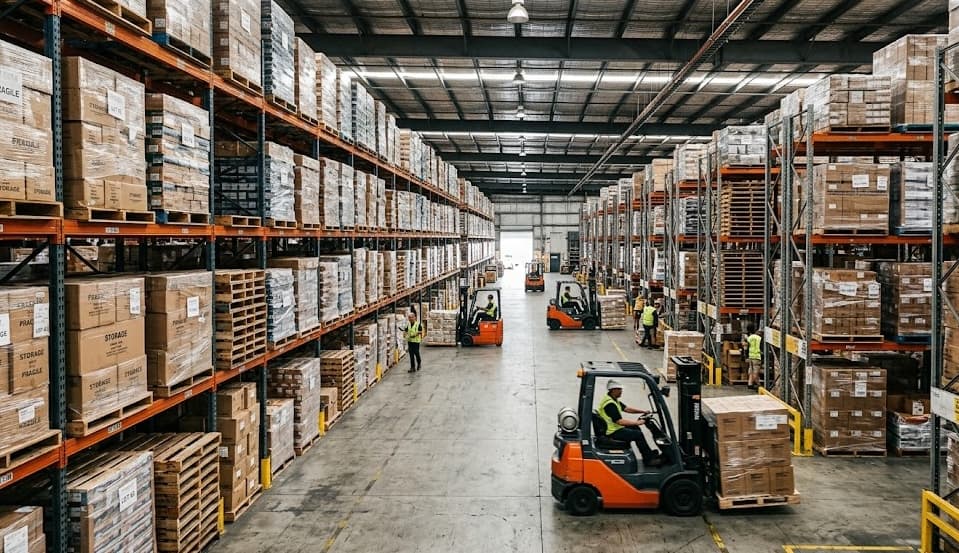
Custom Pallet Dimensions — Any Size, Any Spec
When standard sizes do not fit, we build pallets to your exact dimensions, load requirements, and material specifications. From consultation to delivery, every custom pallet is engineered for your application.
Start Your Custom Pallet Order
Describe your requirements below and our engineering team will provide a custom quote with design recommendations, material options, and pricing. Most quotes are delivered within 24 hours.
When and Why to Choose Custom Pallet Dimensions
Standard pallet sizes work well for most applications — but “most” is not “all.” Roughly 40% of pallet users in North America use at least one non-standard pallet size in their operations. Custom pallets are not a luxury; they are a practical solution for situations where standard dimensions create waste, compromise product safety, or fail to meet regulatory requirements. Here are the most common scenarios where custom pallets deliver measurable value:
Non-Standard Product Dimensions: If your product footprint does not align with any standard pallet size, you have two options: accept overhang and underhang on a standard pallet, or build a pallet that matches your product exactly. The first option creates load stability problems, wastes warehouse space, and increases the risk of product damage. The second option eliminates all three issues. Industries with uniquely shaped products — HVAC equipment, custom machinery, oversized automotive parts, elongated lumber, large appliances, and industrial pipe — regularly specify custom pallets that match their cargo footprint precisely.
Specialized Racking Systems: Not all racking systems use standard beam spans. Narrow-aisle racking, very narrow aisle (VNA) systems, deep-reach configurations, and automated storage and retrieval systems (AS/RS) may require pallet dimensions that differ from the standard 48"x40" footprint. In these environments, even a half-inch dimensional error can prevent proper beam engagement, create forklift clearance issues, or trigger system faults in automated equipment. Custom pallets built to exact racking tolerances ensure reliable performance.
Export Requirements: International shipments often require pallets that match the destination country's standard size or fit specific container configurations. If you ship to Europe, a custom pallet built to 800mm x 1200mm (EUR/EPAL dimensions) may be more cost-effective than buying European pallets at a premium or re-palletizing at the port. Similarly, pallets for ISO shipping containers can be custom-sized to maximize container utilization — a critical factor when freight costs are charged per container regardless of how much space you use.
Weight Optimization: Standard pallets are built to support loads that may far exceed your actual product weight. If you ship lightweight products (e.g., foam, insulation, paper goods, textiles), you are paying for pallet strength you do not need. Custom pallets can be engineered with lighter materials, thinner deck boards, and fewer stringers — reducing pallet weight by 30-50% while still providing adequate support for your specific load. In high-volume operations, this weight reduction translates directly into lower freight costs.
Display and Retail Applications: Retail display pallets are almost always custom. They may need to fit specific store aisle widths, floor display footprints, or end-cap dimensions. They may require special features like built-in skids for manual positioning, smooth top decks for product presentation, or branded markings. Custom display pallets can also incorporate corrugated wraps, graphics, and modular elements that turn the pallet itself into a merchandising asset.
Custom vs. Standard — When Does Custom Actually Make Sense?
Not every situation warrants a custom pallet. Here is a straightforward framework for deciding whether custom dimensions will save you money or cost you more in the long run.
Custom Makes Sense When...
- + Your product overhang exceeds 1.5 inches on any standard pallet size
- + Your racking system was built for non-standard dimensions
- + You ship at least 200+ pallets per month, making the per-unit cost savings compound
- + Your product weighs under 500 lbs and you are paying for 6,000 lb capacity pallets
- + You can gain an extra pallet position per trailer by adjusting dimensions
- + Your customer or regulatory body requires a specific non-standard dimension
- + You need retail display pallets that fit specific floor or endcap footprints
- + You export to regions with different pallet standards (Europe, Asia, Australia)
Standard is Probably Better When...
- – Your product fits within 1 inch of a standard pallet edge on all sides
- – Your volume is under 50 pallets per month — custom setup costs may not justify
- – Your downstream customers require standard GMA pallets
- – You participate in a pallet pooling or exchange program that only handles standard sizes
- – You need pallets urgently — custom pallets have longer lead times than in-stock standards
- – Resale value matters — standard pallets have much higher resale and recycling value
- – Your warehousing is handled by a 3PL that charges premium rates for non-standard pallets
- – The dimension difference from standard is less than 2 inches in any direction
The Break-Even Analysis
The decision to go custom should be driven by numbers, not assumptions. Calculate the total annual cost of using the best-fit standard pallet (including wasted space, product damage, trailer inefficiency, and re-palletization) and compare it to the annual cost of a custom pallet (higher per-unit price, longer lead times, limited resale value, no pooling compatibility). If the custom option saves 10% or more in total cost, it is almost certainly worth the investment. Our team performs this analysis for customers at no charge as part of the consultation process.
How We Engineer Custom Pallets — From Concept to Specification
Custom pallet engineering is a structured process, not guesswork. Our team follows a methodology developed over years of building pallets for hundreds of different applications. Here is how the engineering process works from start to finish.
Step 1: Requirements Definition. We start by documenting everything about your application. What are the exact dimensions of the products or containers the pallet will carry? What is the total load weight, including packaging and dunnage? How is the weight distributed — uniform across the deck, concentrated at specific points, or asymmetric? Will the pallet be floor-stacked, racked, or both? What handling equipment will interact with it (forklift type, pallet jack, conveyor, AS/RS)? Are there any special requirements such as heat treatment, food-grade cleanliness, or specific wood species? This information forms the design brief.
Step 2: Load Analysis and Calculation. Using your load data, we calculate the bending moments, shear forces, and deflection values that the pallet will experience under static, dynamic, and racking conditions. For standard configurations, we use the NWPCA Pallet Design System (PDS) software, which models pallet performance based on wood species, component dimensions, fastener patterns, and load scenarios. For unusual configurations or extreme loads, we supplement PDS calculations with manual engineering analysis and reference data from ASTM test results.
Step 3: Component Selection. Based on the load analysis, we select the optimal combination of wood species, stringer/block dimensions, deck board count and thickness, and fastener type. Each component choice involves trade-offs between strength, weight, cost, and availability. For example, southern yellow pine stringers provide excellent strength at a moderate cost, but oak stringers may be necessary if the pallet must survive 10+ reuse cycles under heavy loads. We present these options transparently so you can make informed decisions about where to invest and where to economize.
Step 4: Dimensional Optimization. The pallet's external dimensions are set by your product footprint, but the internal layout (stringer spacing, deck board width and gap, block placement) is optimized for load distribution and structural efficiency. We also verify that the pallet dimensions are compatible with your racking system, trailer interior, forklift fork spread, and any automated equipment it will encounter. If we identify a dimensional conflict, we resolve it in the design phase — not after production.
Step 5: Specification Document. The final deliverable from engineering is a detailed specification sheet that includes: a dimensioned drawing (plan view, side view, end view), a complete bill of materials listing every component by species, dimension, and quantity, capacity ratings for static, dynamic, and racking loads, estimated empty weight, fastener specification and count, and any special treatment or finish requirements. This document becomes the production blueprint and the quality control reference for every pallet in the order.
Material Selection Guide for Custom Pallets
Material choice is one of the most impactful decisions in custom pallet design. The right material balances strength, weight, cost, moisture resistance, and sustainability. Here is a detailed comparison of the options available for each pallet component.
| Material | Strength | Weight | Cost | Moisture Resistance | Best For |
|---|---|---|---|---|---|
| Southern Yellow Pine | High | Medium | Low-Medium | Moderate | General purpose, best strength-to-cost ratio |
| Oak (Red / White) | Very High | Heavy | High | Good (White Oak excellent) | Heavy-duty, multi-trip, stringers and blocks |
| Mixed Hardwood | Medium-High | Medium-Heavy | Medium | Moderate | Standard duty, widely available in Michigan |
| SPF (Spruce/Pine/Fir) | Medium | Light | Low | Low | Lightweight, single-trip, export pallets |
| Poplar / Aspen | Low-Medium | Very Light | Low | Low | Lightweight loads, deck boards with hardwood stringers |
| Plywood Deck | Medium-High | Medium | Medium-High | Moderate | Smooth surfaces, small-item support, display pallets |
Combination Builds: The most cost-effective custom pallets often use a combination of species. A common strategy is hardwood stringers (oak or SYP for strength) with softwood deck boards (poplar or SPF for lower cost and lighter weight). This combination provides the structural backbone where it matters most while reducing overall cost and weight. Our engineering team routinely recommends combination builds when the application allows for different strength requirements in different components.
Recycled vs. New Lumber: Custom pallets can be built from new lumber, recycled lumber, or a combination. Recycled lumber costs 30-50% less than new lumber and is a sustainable choice, but it introduces variability in species, moisture content, and dimensional accuracy. For applications where tight dimensional tolerances are critical (AS/RS, high-speed conveyors), new lumber is recommended. For floor storage, single-trip, and general warehousing, recycled lumber provides excellent value.
Load Calculation Methodology
Understanding how we calculate pallet loads ensures you get a pallet that is strong enough to be safe but not so over-engineered that you are paying for unnecessary materials.
Uniform Distributed Load (UDL)
The simplest load pattern, where weight is spread evenly across the entire deck surface. Examples include cases of canned goods, stacked boxes of similar size, and banded bundles that fill the entire deck. UDL is the assumption behind standard pallet capacity ratings. If your load is uniformly distributed, you can use published capacity values directly.
Concentrated Point Load
The most demanding load pattern, where weight is applied at specific points on the deck rather than evenly across the surface. Examples include machinery resting on four feet, equipment with pedestals, and heavy objects placed at the pallet center. Point loads create localized stress that can crush deck boards or punch through gaps. Custom pallets for point loads use thicker deck boards, closer spacing, or reinforced areas under the load points.
Eccentric (Off-Center) Load
Occurs when the center of gravity of the load is not centered on the pallet. Examples include L-shaped products, multiple items of different weights, and partial loads. Eccentric loading causes uneven stress distribution, with the heavier side experiencing greater deflection and the lighter side potentially lifting during forklift handling. Custom pallets for eccentric loads may use asymmetric stringer placement or additional reinforcement on the heavy side.
Safety Factor Calculation
We design every custom pallet with a minimum safety factor of 1.5x for racking loads and 1.2x for static and dynamic loads. This means a pallet rated for 2,000 lbs racking capacity has been engineered to withstand at least 3,000 lbs before failure. The safety factor accounts for wood variability, moisture content changes over time, fastener degradation from repeated use, and occasional impact events during handling. For critical applications (pharmaceutical, hazardous materials), we increase the safety factor to 2.0x or higher.
Design Considerations for Custom Pallets
Designing a custom pallet involves balancing multiple technical factors. Our engineering team considers all of the following when developing your custom pallet specification. Understanding these factors will help you communicate your requirements effectively and make informed decisions about trade-offs.
Load Capacity Engineering
Every custom pallet starts with load analysis. We need to know the total weight, weight distribution pattern (uniform, concentrated, or point loads), stacking height, and whether the pallet will be used for floor storage, racking, or both. Our team uses the NWPCA Pallet Design System (PDS) to model the pallet under your specific load conditions and calculate the required component dimensions, wood species, and fastener pattern. We design to your actual load with a minimum 20% safety margin — strong enough to perform reliably without paying for unnecessary over-engineering.
Material Selection
The wood species affects strength, weight, cost, moisture resistance, and appearance. Southern yellow pine provides the best strength-to-cost ratio for most applications. Oak and hardwood blends deliver maximum durability for heavy-duty or multi-trip pallets. SPF and poplar offer lightweight solutions for single-trip or low-load applications. We can also build with plywood decks, OSB panels, or combination constructions that use hardwood stringers with softwood decks for optimal cost/performance balance.
Deck Board Spacing & Configuration
Deck board count, width, and spacing determine the pallet's ability to support the load without point-load failures. Standard pallets use 7 top boards with gaps of approximately 2.5 inches between boards. For products with small footprints (cans, bottles, small boxes), closer spacing or a full-deck (no-gap) configuration prevents products from falling through. For heavy point loads (machinery feet, equipment bases), wider and thicker deck boards provide better load distribution. We optimize the deck board layout for your specific product geometry.
Entry Type (2-Way vs. 4-Way)
Fork entry type affects how your pallet interacts with forklifts, pallet jacks, and automated handling equipment. Two-way entry (standard stringer design) allows fork entry from two opposite sides only. Partial 4-way entry uses notched stringers that accommodate forks from all four sides but with reduced lift capacity on the notched axis. Full 4-way entry (block construction) provides equal access from all sides. The right choice depends on your warehouse layout, handling equipment, and whether the pallet needs to work in automated systems.
Height & Clearance
Standard pallet height is 6" to 6.5", but custom pallets can be built taller or shorter depending on your needs. Low-profile pallets (3" to 4") are used for products that need to fit in height-restricted trailers or low-clearance racking. Extra-tall pallets (8" to 12") provide elevated clearance for bottom-ventilated products, floor-cleaning equipment, or specialized handling situations. Pallet height also affects stack height in trailers and warehouses, so we factor in your total unit load height when recommending dimensions.
Surface Treatment & Finish
Depending on the application, custom pallets may require special surface treatments. Heat treatment (HT) is required for international shipping under ISPM-15. Kiln drying reduces moisture content for food-grade and pharmaceutical environments. Sanding creates smooth surfaces that prevent product snagging or damage to sensitive packaging. Anti-slip coatings (rubberized or textured paint) increase friction between the pallet and the load, reducing the need for stretch wrap or banding on certain products.
Design Constraints & Limitations to Be Aware Of
While we can build pallets in virtually any dimension, there are practical constraints that affect design, cost, and performance. Being aware of these upfront will help you set realistic expectations and avoid design revisions later in the process.
Maximum Practical Span: The longest unsupported span a standard wood stringer can bridge is approximately 60 inches before deflection becomes a concern under moderate loads. Pallets wider than 60 inches typically require additional center stringers, block construction, or reinforced stringer dimensions. Pallets wider than 72 inches may need engineered solutions such as steel reinforcement or glue-laminated stringers.
Minimum Practical Dimensions: Pallets smaller than approximately 24" x 24" become difficult to handle with standard forklifts because the fork tines require a minimum entry depth to lift safely. Very small pallets may require hand-jack handling or specialized equipment. If you need very small platforms, consider whether a skid (no bottom deck) or a shipping base might be a more practical solution.
Lumber Availability: Custom pallets that use standard lumber dimensions (1x4, 1x6, 2x4, 2x6) benefit from readily available stock at competitive prices. Non-standard lumber widths require custom ripping at the sawmill, which adds cost and lead time. If possible, we design your pallet around standard lumber widths and adjust the number of boards and gaps to achieve your desired dimensions.
Asymmetric Designs: Asymmetric pallets (different stringer spacing on each side, unequal overhang, or non-rectangular shapes) are possible but add complexity to production. Each asymmetric pallet requires a dedicated jig, increases the risk of assembly errors, and cannot be rotated during handling without potentially creating clearance issues. We will build asymmetric designs when the application demands it, but we will also explore whether a symmetric alternative can achieve the same result.
Weight-to-Strength Ratio: There is a physical limit to how light a pallet can be while still supporting a given load. Customers sometimes request pallets that weigh less than 20 pounds while supporting 2,000+ pounds. Depending on the dimensions, this may require exotic materials (engineered wood, composite panels) or may simply not be achievable with solid wood construction. Our engineering team will clearly communicate what is and is not possible within your weight and strength targets.
Prototyping & Testing Procedures
Before committing to a full production run, we build and test prototypes to verify that your custom pallet performs as designed in your actual operating environment.
Prototype Build (5-10 Units)
We manufacture a small batch of 5-10 prototype pallets using the exact materials, fasteners, and construction methods specified in the engineering document. These prototypes are inspected by our quality team before shipment to ensure they match the specification to within published tolerances (typically +/- 1/4 inch on all dimensions).
Customer Testing
You receive the prototypes and test them in your actual operating environment. Load them with real product. Test them in your racking system. Run them through your forklift fleet. Verify clearances in your trailers. Check that your stretch wrap machines and conveyors handle them properly. Test them at every point in your workflow where the pallet will be used. This real-world testing catches issues that no amount of engineering calculation can predict.
Feedback & Revision
Based on your testing results, you may request design modifications. Common adjustments include: slightly different overall dimensions (correcting for clearance issues discovered during testing), different deck board spacing (to better support product footprints), additional reinforcement (if deflection under load was greater than expected), or changes to the fork entry configuration. We make revisions at no additional engineering charge and build a second prototype batch if significant changes are required.
Final Approval & Production
Once you approve the prototype, we lock the specification and proceed to full production. The approved prototype serves as the reference standard for quality control during the production run. Our production team measures every batch against the prototype to ensure dimensional consistency and structural integrity across the entire order. Any deviation from the approved specification triggers a hold and review before the batch is released.
Most Frequently Requested Custom Sizes
While every custom project is unique, we see certain non-standard sizes requested repeatedly across our customer base. If your needs match any of these common custom configurations, we may already have production jigs and material stock on hand, which can reduce lead time and cost.
| Custom Size | Common Application | Typical Construction | Lead Time |
|---|---|---|---|
| 60" x 48" | Oversized machinery, large appliances, HVAC units | Heavy-duty stringer or block, close-deck | 5-7 days |
| 72" x 42" | Commercial HVAC, industrial equipment | Block pallet with center support | 7-10 days |
| 48" x 36" | Compact loads, narrow-aisle warehouses | Standard stringer, partial 4-way | 3-5 days |
| 800mm x 1200mm | European export (EUR pallet equivalent) | Block, ISPM-15 heat treated | 5-7 days |
| 30" x 30" | Retail display, promotional placement | Block, sanded top, lightweight | 5-7 days |
| 1100mm x 1100mm | Asian export (Japan, Korea, China) | Block, ISPM-15 heat treated | 5-7 days |
| 96" x 48" | Sheet goods, panels, flat-pack furniture | Stringer with 4+ supports, reinforced | 7-10 days |
| 48" x 40" (lightweight) | Standard footprint, reduced weight for light cargo | Thin poplar deck, SPF stringers | 3-5 days |
Minimum Orders, Lead Times & Pricing
| Order Size | Minimum Order | Production Lead Time | Pricing Tier |
|---|---|---|---|
| Prototype / Sample | 5 – 10 units | 3 – 5 business days | Higher per-unit (setup cost amortized over small quantity) |
| Small Batch | 50 – 199 units | 3 – 5 business days | Standard pricing |
| Medium Order | 200 – 999 units | 5 – 10 business days | Volume discount applied |
| Large Order | 1,000 – 4,999 units | 10 – 15 business days | Significant volume discount |
| Enterprise / Contract | 5,000+ units | Scheduled production runs | Best pricing; dedicated production scheduling; contract terms available |
Minimum Order Quantity: Our standard minimum order for custom pallets is 50 units. This threshold ensures that the setup costs (jig fabrication, material cutting, quality verification) are distributed across enough units to keep per-unit pricing reasonable. For orders under 50 units, we can still accommodate your request, but expect a higher per-unit price due to setup cost amortization. Prototype orders of 5-10 units are always available regardless of eventual order size.
Lead Time Factors: Several variables influence production lead time beyond just the order quantity. Material availability is the most significant — if your design requires a specific wood species that is not in our current inventory, sourcing that material may add 3-5 days. Complex constructions (block pallets, close-deck configurations, multi-species builds) require more assembly time per unit. ISPM-15 heat treatment adds 1-2 days for the treatment cycle and certification process. Seasonal demand peaks (typically September through November) may extend lead times by 2-3 days across all order sizes.
Rush Orders: If you need custom pallets faster than standard lead times, we offer rush production for an additional 15-25% surcharge depending on order size and current production schedules. Rush production typically cuts lead times in half. Contact us to discuss your timeline and we will let you know what is achievable.
What Drives Custom Pallet Pricing
Custom pallet pricing is influenced by several interconnected factors. Understanding these factors will help you make informed trade-offs between performance, cost, and lead time. Here is how each factor impacts your per-unit price:
Pallet Size: Larger pallets use more lumber and more fasteners, so they cost more per unit. A 60"x48" custom pallet will cost roughly 40-60% more than a standard 48"x40" pallet due to additional materials alone. Conversely, smaller pallets (e.g., 36"x24") use less material but may not benefit from the same volume lumber pricing because the non-standard dimensions require custom cutting.
Material / Wood Species: Southern yellow pine is the most cost-effective structural wood for pallets. Oak and hardwood blends cost 20-40% more per board foot but offer superior strength and durability. SPF is similar in price to SYP but lighter and weaker. Plywood decks add 30-50% to the deck cost but provide smooth surfaces and uniform strength. Your material choice should align with your load requirements and reuse expectations — paying for oak on a single-trip pallet is waste, just as specifying poplar for a heavy-duty racking application is a risk.
Quantity: Unit pricing decreases significantly with volume. A custom pallet that costs $18-22 per unit at 50 pieces might cost $12-15 per unit at 500 pieces and $8-12 per unit at 5,000 pieces. The savings come from setup cost distribution, bulk material purchasing, and production line efficiency. If your annual consumption justifies it, a contract purchase agreement can lock in the best per-unit pricing for the year.
Construction Complexity: Simple stringer pallets with standard deck boards are the least expensive to build. Block pallets cost more due to additional components and assembly labor. Close-deck (no-gap) configurations cost more because they use more deck boards. Special features like chamfered edges, sanded surfaces, anti-slip coatings, ISPM-15 heat treatment, or branded markings each add to the unit cost. We provide transparent line-item pricing so you can see exactly what each feature costs and make informed decisions about which features are essential for your application.
Treatment Requirements: Heat treatment for ISPM-15 compliance typically adds $1.50-3.00 per pallet. Kiln drying to precision moisture levels (below 15%) adds $2.00-4.00 per pallet depending on the species and target moisture content. Mold treatment (anti-fungal application) adds $0.50-1.50 per pallet. These treatments are applied after construction and require additional processing time.
Delivery Distance: Local delivery within the greater Detroit/Warren area is often included in the order price for volume orders. Regional delivery (within Michigan) adds a per-load freight charge that varies by distance. National shipping via common carrier or dedicated truck is quoted separately. For large orders, freight cost per pallet can be minimized by shipping full truckloads (approximately 400-600 pallets per 53-foot trailer, depending on pallet size and stacking).
Examples of Custom Pallets We Have Built
The following examples illustrate the range of custom pallet projects we handle. Each one presented unique challenges that standard pallets could not solve.
72" x 42" Heavy-Duty HVAC Equipment Pallet
An HVAC manufacturer in Metro Detroit needed pallets for commercial rooftop units weighing 800-1,200 lbs each with a concentrated load footprint. Standard 48x40 pallets were too small (overhang on the long axis), and 48x48 pallets did not match the equipment width. We designed a 72"x42" block pallet using southern yellow pine stringers and oak blocks, with a close-deck top surface to prevent point-load failures at the equipment mounting feet. Static capacity: 4,500 lbs. The customer orders 200 units per quarter on a standing schedule.
800mm x 1200mm ISPM-15 Export Pallet
An automotive parts supplier shipping to European assembly plants needed EUR-dimensioned pallets built domestically rather than importing them. We manufactured 800mm x 1200mm block pallets from kiln-dried SPF, heat-treated to ISPM-15 standards, with the IPPC compliance mark applied. The pallets arrive at European facilities ready to integrate with standard EUR racking systems. Cost savings versus purchasing imported EPAL pallets: approximately 30% per unit. The customer orders 1,000 units monthly.
48" x 40" Lightweight Insulation Pallet
A building insulation manufacturer was paying standard pallet prices for a product that weighs only 150-300 lbs per pallet load. The standard GMA pallet (6,000 lb capacity, 40 lb empty weight) was massive overkill. We designed a lightweight 48"x40" pallet using poplar deck boards and SPF stringers with reduced dimensions (0.5" deck boards, 2.5" stringers). Empty weight: 22 lbs. Dynamic capacity: 1,200 lbs — more than adequate for their product. Per-unit savings: approximately 35% versus standard GMA pallets. Across their annual volume of 15,000 pallets, the savings exceeded $45,000 per year.
30" x 30" Retail Display Pallet
A consumer electronics brand needed a small-format display pallet for in-store promotional placement at big-box retailers. The pallet had to fit a 30"x30" floor display footprint, support 400 lbs of product, and include a smooth sanded top deck to prevent packaging scuffs. We built a compact block pallet from kiln-dried poplar with a full-deck (no-gap) sanded top surface and chamfered edges. The result was a clean, professional display platform that doubled as the shipping base — eliminating the need for a separate display fixture.
54" x 44" Automotive Sequencing Pallet
A Tier 1 automotive supplier near Warren, MI, needed a pallet specifically designed for their just-in-sequence delivery program to a major OEM assembly plant. The pallet had to carry specialized dunnage trays holding 24 door panel assemblies, fit precisely within the OEM's automated conveyor system, and survive a minimum of 15 round-trip cycles between the supplier and assembly plant. We engineered a 54"x44" block pallet from oak blocks and SYP deck boards with reinforced lead boards, precision dimensions to within 1/8 inch for conveyor compatibility, and a branded mark for return tracking. After 18 months of use, average pallet lifespan has exceeded 20 cycles.
43" x 43" Container-Optimized Export Pallet
An industrial equipment exporter needed pallets sized to maximize utilization of 20-foot ISO shipping containers. Standard 48x40 pallets leave significant wasted space in containers. We designed a 43"x43" pallet that tiles in a 2x5 pattern within the container, utilizing 93% of the floor area compared to only 78% with standard GMA pallets. Over 200 container shipments per year, this dimensional optimization saved the customer approximately 40 containers annually — translating to over $120,000 in freight savings at their average per-container cost.
Tips for Optimizing Your Custom Pallet Design
After building thousands of custom pallets for hundreds of customers, we have developed a set of best practices that consistently save money and improve performance. Here are our top recommendations for anyone specifying a custom pallet:
Design for the actual load, not the theoretical maximum. One of the most common mistakes in custom pallet specification is over-engineering. If your heaviest pallet load is 1,500 lbs, you do not need a 6,000 lb pallet. Design for 1,500 lbs plus a 20-30% safety margin (1,800-1,950 lbs) and save on materials and weight. The right pallet is the one that does the job reliably at the lowest cost — not the strongest pallet possible.
Use standard lumber dimensions whenever possible. Custom pallet dimensions do not require custom lumber dimensions. Deck boards at 3.5", 5.5", and 7.25" widths (nominal 1x4, 1x6, and 1x8) are standard mill sizes that are always in stock and competitively priced. Stringers at 1.5" x 3.5" (nominal 2x4) and 1.5" x 5.5" (nominal 2x6) are similarly standard. When your custom pallet uses standard lumber widths, you avoid custom ripping charges and benefit from bulk lumber pricing.
Consider the return trip. If your pallets travel one-way to a customer and are not returned, invest only in what is needed for a single trip. But if pallets will circulate through your supply chain for multiple cycles, invest in durability: thicker deck boards, ring-shank nails, hardwood stringers, and block construction. The incremental cost per pallet is typically 20-40% higher, but the per-trip cost over 5-10 reuse cycles is dramatically lower.
Optimize for your trailer and container. Before finalizing dimensions, run the numbers on how your custom pallet tiles inside your primary transport container. Even a 1-inch dimensional adjustment can sometimes yield an additional pallet position per trailer — which, over thousands of shipments, produces significant freight savings. Our team routinely performs trailer utilization analysis as part of the design process.
Plan for pallet repair. Design your custom pallet so that the most likely failure components (top deck boards, lead boards) can be replaced easily during repair. Avoid proprietary dimensions or unusual fastener patterns that would prevent a standard pallet repair facility from servicing your pallets. Repairability extends pallet lifespan and reduces your total cost of ownership.
Document everything. Keep a copy of your custom pallet specification on file and share it with your logistics partners, 3PL providers, and receiving facilities. When everyone in your supply chain knows the exact dimensions, weight, and capacity of your pallet, handling errors decrease and operational efficiency improves. We provide a detailed spec sheet with every custom pallet order that you can distribute to your downstream partners.
Ready to Design Your Custom Pallet?
Contact Ace Pallet Service to start the custom pallet process. Our team will guide you from initial concept through engineering, prototyping, and production. First consultations are always free.
Ace Pallet Service · 7236 Murthum Ave, Warren, MI 48092