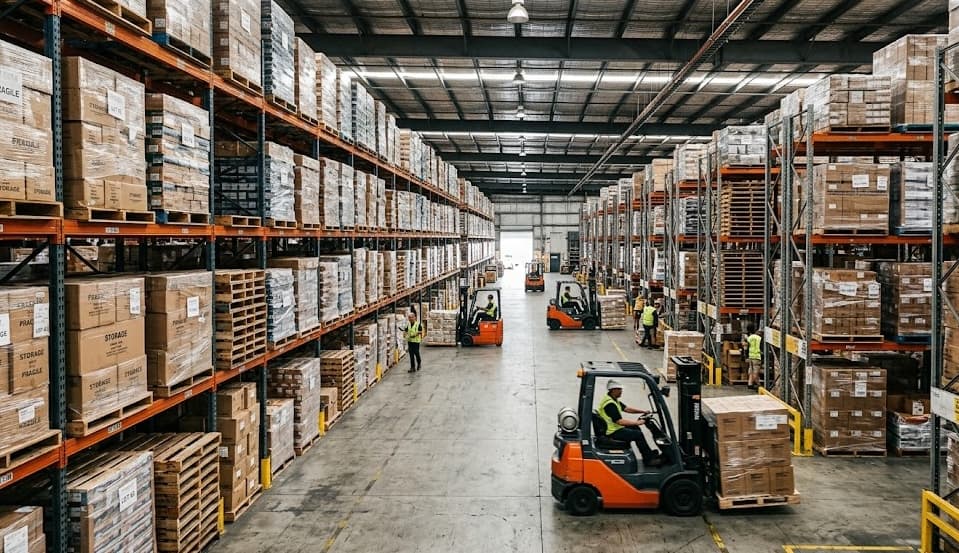
Standard Pallet Sizes — US & International Dimensions
Complete technical specifications for every standard pallet size used in North American and international commerce. Dimensions, capacities, applications, and construction details.
Order Standard-Size Pallets
We stock all standard sizes listed on this page. Request a quote and we will provide competitive pricing with volume discounts for orders of any quantity.
Understanding Pallet Standardization
Pallet standardization has been a cornerstone of modern logistics since the mid-20th century. The Grocery Manufacturers Association (GMA), now part of the Consumer Brands Association, established the 48"x40" footprint as the North American standard in the 1960s. This single decision transformed the supply chain industry by creating interoperability between warehouses, trucks, racking systems, and material handling equipment across the continent.
Today, several organizations maintain pallet standards globally. In North America, the GMA specification governs the most widely used pallet. In Europe, the European Pallet Association (EPAL) manages the EUR pallet system. The International Organization for Standardization (ISO) recognizes six pallet footprints for international trade under ISO 6780. Each standard addresses not only dimensions but also construction methods, materials, load capacities, and quality grades.
The following sections provide detailed specifications for each standard pallet size. We cover exact dimensions in both imperial and metric units, static and dynamic load capacities, typical industries served, construction types available (stringer vs. block), deck board count, estimated cost ranges, availability status at Ace Pallet Service, stacking height limits, and the advantages and limitations of each format.
48" x 40" — GMA Standard Pallet
The 48"x40" GMA pallet is the undisputed workhorse of North American logistics. Accounting for approximately 30% of all new pallets produced in the United States — an estimated 450-500 million units annually — it is the single most manufactured wood product in the country. Its dominance stems from a simple fact: it is the perfect fit for the American supply chain infrastructure.
Two GMA pallets placed side-by-side span 80 inches, fitting neatly within the 100-inch internal width of a standard dry van trailer with adequate clearance for forklift entry and load securing. Thirteen rows of two pallets fill a 53-foot trailer from end to end, yielding 26 pallet positions per layer. This near-perfect trailer utilization is no accident — the trailer dimensions and pallet dimensions were co-optimized over decades of industry coordination.
The GMA pallet is also the default specification for selective pallet racking, which accounts for roughly 85% of all warehouse racking installed in North America. Standard selective racking uses 96-inch (8-foot) beam spans designed to accommodate two 48"x40" pallets with proper clearance. Switching to a non-GMA pallet size in a facility with standard racking typically requires racking modifications or replacement — a significant capital expense.
| 48" x 40" GMA Specifications | |
|---|---|
| Dimensions (Imperial) | 48" L x 40" W x 6.5" H (stringer) / 6" H (block) |
| Dimensions (Metric) | 1219mm L x 1016mm W x 165mm H (stringer) / 152mm H (block) |
| Static Load Capacity | 6,000 – 8,000 lbs (2,722 – 3,629 kg) depending on construction |
| Dynamic Load Capacity | 4,600 lbs (2,087 kg) standard; up to 5,500 lbs for heavy-duty builds |
| Racking Capacity | 2,500 lbs (1,134 kg) standard; up to 3,500 lbs for block pallets |
| Pallet Weight (Empty) | 33 – 48 lbs (15 – 22 kg) depending on wood species and construction |
| Construction Types | Stringer (2-way or partial 4-way) and Block (full 4-way entry) |
| Deck Board Count | Top: 7 boards (standard) or 11 boards (close-deck); Bottom: 5 boards |
| Primary Industries | Grocery, retail, consumer goods, pharmaceuticals, general freight |
| Market Share | ~30% of all pallets in North America |
| Compatible Equipment | All standard forklifts, pallet jacks, conveyors, AS/RS, stretch wrap machines |
| Stacking Height | 5 high (floor stack, evenly distributed load); 6 high for block pallets |
| Typical Cost Range | $4-8 (Grade C recycled) to $12-18 (new); pricing varies by volume and market |
| Availability at Ace | Always in stock: New, Grade A, Grade B, Grade C, Block, and Heat-Treated variants |
Advantages
- + Universal compatibility with North American racking and trailers
- + Lowest per-unit cost due to massive production volume
- + Widest availability in new, used, and recycled grades
- + Readily available as heat-treated for ISPM-15 export compliance
- + Highest resale value on the secondary market
- + Compatible with automated conveyor and AS/RS systems
- + Accepted by all major retailers including Walmart, Target, Costco, and Amazon
Limitations
- – Not optimal for round containers like 55-gallon drums (overhang on 40" side)
- – 2-way stringer design limits fork entry to two sides only
- – Not standard in Europe, Asia, or Australia (size mismatch with overseas racking)
- – Stringer variants have lower racking capacity than block pallets
- – Beverage cases may overhang slightly on the 40" width
42" x 42" — Telecom / Paint Industry Pallet
The 42"x42" pallet is the second most common pallet size in North America by market share, accounting for approximately 8% of production. Its square footprint makes it the preferred choice for industries that handle round containers, cylindrical products, and items that benefit from symmetrical load distribution. The telecommunications industry adopted this size as its standard for shipping cable reels, equipment cabinets, and network hardware. The paint industry uses it extensively for stacking 5-gallon pails and 1-gallon cans in optimized patterns.
The square format offers a distinct advantage for drum handling: a 42"x42" pallet accommodates four 55-gallon drums in a tight 2x2 pattern with minimal overhang, whereas a standard 48"x40" pallet creates a 2-inch gap on one axis and overhang on the other. For operations that handle drums as a primary product, the 42"x42" pallet can reduce product damage and improve load stability significantly.
| 42" x 42" Specifications | |
|---|---|
| Dimensions (Imperial) | 42" L x 42" W x 5.5" H |
| Dimensions (Metric) | 1067mm L x 1067mm W x 140mm H |
| Static Load Capacity | 5,500 lbs (2,495 kg) |
| Dynamic Load Capacity | 4,000 lbs (1,814 kg) |
| Racking Capacity | 2,200 lbs (998 kg) |
| Pallet Weight | 35 – 45 lbs (16 – 20 kg) |
| Deck Board Count | Top: 7 boards (standard); Bottom: 5 boards |
| Primary Industries | Telecommunications, paint, coatings, drums, chemical containers |
| Compatible Equipment | Standard forklifts and pallet jacks. May require racking adjustment for non-standard beam spans. |
| Stacking Height | 4-5 high (floor stack with uniform load) |
| Typical Cost Range | $6-10 (recycled) to $14-20 (new); less available than GMA, may have slight premium |
| Availability at Ace | Stocked in new and recycled grades. Block available on request. |
48" x 48" — Drum / Bulk Container Pallet
The 48"x48" pallet is a heavy-duty square format designed primarily for 55-gallon drums, intermediate bulk containers (IBCs), and other large cylindrical or square products. At 16 square feet of deck area, it provides the largest standard footprint available and is built to handle concentrated loads typical of the chemical, petroleum, and food ingredient industries.
This size accommodates four 55-gallon drums (each approximately 23" in diameter) with comfortable clearance for banding and securing. It is also the standard pallet for 275-gallon and 330-gallon tote tanks (IBCs), which have a base footprint of approximately 40"x48" and sit well within the 48"x48" deck. The extra width provides a stability margin that prevents tipping during forklift handling.
Because of its square footprint, the 48"x48" pallet does not tile as efficiently in a standard 53-foot trailer as the 48"x40" GMA. Two pallets side-by-side span 96 inches, leaving only 4 inches of clearance in a 100-inch-wide trailer. While this works, it requires careful loading to avoid wall contact.
| 48" x 48" Specifications | |
|---|---|
| Dimensions (Imperial) | 48" L x 48" W x 6" H |
| Dimensions (Metric) | 1219mm L x 1219mm W x 152mm H |
| Static Load Capacity | 6,000 – 8,000 lbs (2,722 – 3,629 kg) |
| Dynamic Load Capacity | 4,600 lbs (2,087 kg) |
| Racking Capacity | 2,500 lbs (1,134 kg) |
| Pallet Weight | 40 – 55 lbs (18 – 25 kg) |
| Deck Board Count | Top: 7-9 boards (standard to close-deck); Bottom: 5-7 boards |
| Primary Industries | Drums, chemicals, petroleum, bulk containers, IBCs, food ingredients |
| Compatible Equipment | Standard forklifts. Tight fit in standard trailers — careful loading required. |
| Stacking Height | 3-4 high (drums are typically not stacked more than 2 high due to center-of-gravity risk) |
| Typical Cost Range | $8-12 (recycled) to $16-24 (new heavy-duty block) |
| Availability at Ace | Stocked in recycled grades. New and block builds available with 3-5 day lead time. |
48" x 42" — Chemical & Beverage Industry Pallet
The 48"x42" pallet emerged as a specialized solution for the chemical and beverage industries, which handle products that are slightly wider than what the standard 48"x40" GMA pallet can accommodate without overhang. The extra 2 inches of width may seem insignificant, but for beverage cases, chemical pails, and multi-pack cartons, those 2 inches eliminate overhang problems that would otherwise compromise load stability and create safety hazards.
Major beverage producers — including Coca-Cola, PepsiCo, and Anheuser-Busch — have historically specified 48"x42" pallets for their distribution networks. The case dimensions of standard 24-pack beverage cartons tile optimally on a 42-inch width, creating a flush, stable load that can be stretch-wrapped without the deformation issues that occur when cases overhang the pallet edge.
| 48" x 42" Specifications | |
|---|---|
| Dimensions (Imperial) | 48" L x 42" W x 5.5" – 6" H |
| Dimensions (Metric) | 1219mm L x 1067mm W x 140 – 152mm H |
| Static Load Capacity | 5,500 lbs (2,495 kg) |
| Dynamic Load Capacity | 4,000 lbs (1,814 kg) |
| Racking Capacity | 2,200 lbs (998 kg) |
| Pallet Weight | 35 – 42 lbs (16 – 19 kg) |
| Deck Board Count | Top: 7 boards; Bottom: 5 boards |
| Primary Industries | Chemical manufacturing, beverage distribution, paint, industrial coatings |
| Stacking Height | 4-5 high (depends on product weight and stability) |
| Typical Cost Range | $6-10 (recycled) to $14-20 (new) |
| Availability at Ace | Available in recycled and new. Heavy-duty block builds on request. 3-5 day lead time for new builds. |
40" x 48" — Military / Department of Defense Pallet
The 40"x48" pallet is dimensionally identical to the 48"x40" GMA pallet but with the lead dimension reversed — meaning the 40-inch dimension faces the direction of fork entry rather than the 48-inch dimension. This orientation was standardized by the U.S. Department of Defense (DOD) for military logistics and has been adopted by several government agencies and defense contractors.
Many military specifications require block pallet construction for full 4-way fork entry, heat treatment for ISPM-15 compliance (since military cargo frequently moves internationally), and specific wood species (typically southern yellow pine or oak) for structural consistency. The DOD procurement system issues pallets through the Defense Logistics Agency (DLA), and suppliers must meet MIL-STD specifications.
| 40" x 48" Military Specifications | |
|---|---|
| Dimensions (Imperial) | 40" L x 48" W x 6" H |
| Dimensions (Metric) | 1016mm L x 1219mm W x 152mm H |
| Static Load Capacity | 6,000 lbs (2,722 kg) |
| Dynamic Load Capacity | 4,600 lbs (2,087 kg) |
| Racking Capacity | 2,500 lbs (1,134 kg) for block construction |
| Pallet Weight | 40 – 50 lbs (18 – 23 kg) |
| Primary Industries | U.S. military, defense contractors, government agencies, DOD supply chain |
| Construction | Typically block construction for 4-way entry; MIL-STD compliant |
| Typical Cost Range | $12-20 (new block, MIL-STD compliant, heat treated) |
| Availability at Ace | Built to order. 5-7 day lead time. ISPM-15 treatment included. |
48" x 20" — Retail Half-Pallet
The 48"x20" half-pallet is a specialized retail display format designed for in-store merchandising and point-of-purchase applications. It is exactly half the width of a standard GMA pallet, which allows two half-pallets to occupy the same footprint as one full pallet in the supply chain — from manufacturing through distribution — and then separate into individual display units at the store level.
Major retailers including Walmart, Target, Costco, and Home Depot use half-pallets extensively for promotional displays, end-cap merchandising, and high-velocity product placement. The format eliminates the need for store associates to break down full pallets and hand-stock shelves. Instead, the loaded half-pallet is wheeled directly from the backroom to the sales floor.
| 48" x 20" Half-Pallet Specifications | |
|---|---|
| Dimensions (Imperial) | 48" L x 20" W x 5" – 6" H |
| Dimensions (Metric) | 1219mm L x 508mm W x 127 – 152mm H |
| Static Load Capacity | 2,800 lbs (1,270 kg) |
| Dynamic Load Capacity | 2,000 lbs (907 kg) |
| Racking Capacity | 1,200 lbs (544 kg) — not commonly racked; primarily for floor display |
| Pallet Weight | 18 – 25 lbs (8 – 11 kg) |
| Primary Industries | Retail display, in-store merchandising, CPG promotional placement |
| Construction | Block (4-way entry). Available in wood and plastic. Often single-trip use. |
| Typical Cost Range | $5-8 (wood, single-trip) to $15-30 (plastic, reusable) |
| Availability at Ace | Wood half-pallets built to order. 3-5 day lead time. Plastic available through partners. |
Additional Standard Sizes
The following sizes serve specific industry niches. While less common than the GMA standard, they are standardized for their respective sectors and are available from Ace Pallet Service in both new and recycled grades.
44" x 44" — Chemical Drum Pallet
Dimensions: 44" L x 44" W x 5.5" H (1118mm x 1118mm x 140mm)
Static Capacity: 5,500 lbs (2,495 kg)
Dynamic Capacity: 4,000 lbs (1,814 kg)
Racking Capacity: 2,200 lbs (998 kg)
Empty Weight: 36-44 lbs
Deck Boards: Top: 7; Bottom: 5
Industries: Chemical drums, square containers, specialty coatings. Slightly smaller than the 48x48 but offers a tighter fit for certain drum configurations.
Market Share: ~2% of North American production
Stacking Height: 4 high (floor stack)
Cost Range: $7-12 (recycled) to $15-22 (new)
Availability: Stocked in limited recycled quantities. New builds 5-7 day lead time.
48" x 45" — Automotive Pallet
Dimensions: 48" L x 45" W x 6" H (1219mm x 1143mm x 152mm)
Static Capacity: 5,500 lbs (2,495 kg)
Dynamic Capacity: 4,200 lbs (1,905 kg)
Racking Capacity: 2,300 lbs (1,043 kg)
Empty Weight: 38-46 lbs
Deck Boards: Top: 7; Bottom: 5
Industries: Automotive parts, wide-format cargo. The 45-inch width accommodates automotive parts bins and dunnage trays that are standard in the Detroit-area automotive supply chain. OEMs including GM, Ford, and Stellantis specify this size.
Market Share: ~2% of North American production
Stacking Height: 4-5 high (floor stack)
Cost Range: $7-12 (recycled) to $14-20 (new)
Availability: Strong availability in Metro Detroit due to automotive demand. Recycled and new grades stocked.
36" x 36" — Small Format Pallet
Dimensions: 36" L x 36" W x 5" H (914mm x 914mm x 127mm)
Static Capacity: 4,500 lbs (2,041 kg)
Dynamic Capacity: 3,000 lbs (1,361 kg)
Racking Capacity: 1,800 lbs (816 kg)
Empty Weight: 25-32 lbs
Deck Boards: Top: 5-7; Bottom: 3-5
Industries: Retail displays, small-batch shipments, specialty beverages, craft products. Popular for compact product displays and promotional floor placements in stores with narrow aisles.
Market Share: ~3% of North American production
Stacking Height: 5 high (lightweight products)
Cost Range: $4-7 (recycled) to $10-16 (new)
Availability: Limited recycled stock. New builds available with 3-5 day lead time.
International Pallet Standards
The International Organization for Standardization (ISO) recognizes six pallet footprints under ISO 6780 for global trade. Each was developed to optimize container and trailer utilization within its region of origin.
| ISO Standard | Dimensions (mm) | Dimensions (in) | Primary Region | Common Name |
|---|---|---|---|---|
| ISO 1 | 1200 x 1000 | 47.24" x 39.37" | Europe, Asia | EUR 1 / EPAL 1 |
| ISO 2 | 1200 x 800 | 47.24" x 31.50" | Europe | EUR 2 / EPAL 2 |
| ISO 3 | 1165 x 1165 | 45.87" x 45.87" | Australia | Australian Standard |
| ISO 4 | 1100 x 1100 | 43.30" x 43.30" | Asia, Pacific Rim | Asian Standard |
| ISO 5 | 1067 x 1067 | 42.00" x 42.00" | N. America, Europe | Telecom / Paint |
| ISO 6 | 1219 x 1016 | 48.00" x 40.00" | North America | GMA Standard |
EUR/EPAL Pallet System (800mm x 1200mm)
The European Pallet Association (EPAL) manages the most widely used pallet pooling system outside North America. The EUR pallet measures 800mm x 1200mm (31.5" x 47.2") and is the standard for European road, rail, and intermodal transport. Over 600 million EPAL pallets are currently in circulation, with approximately 100 million new units produced annually. EPAL pallets are built to exacting specifications: designated wood species, dimensional tolerances of +/- 3mm, 78 nails in a prescribed pattern, and nine blocks.
Australian Standard Pallet (1165mm x 1165mm)
The Australian standard pallet measures 1165mm x 1165mm (approximately 45.9" x 45.9") and is managed by CHEP under the blue pallet system. Two pallets fit side-by-side in a standard Australian container. The market is dominated by pooling systems where pallets are rented rather than purchased.
Asian Standard Pallet (1100mm x 1100mm)
The 1100mm x 1100mm pallet is the dominant standard across Japan, South Korea, and increasingly China and Southeast Asia. Four pallets fit perfectly across the 2350mm width of a standard ISO shipping container. Japan's pallet standardization body (JPA) has driven this format since the 1970s, with extremely high standards for dimensional accuracy and surface quality.
Stringer Pallets vs. Block Pallets
Every standard pallet is built using one of two fundamental construction methods: stringer or block. The choice between these two architectures affects fork entry direction, load capacity, racking performance, weight, cost, and repairability.
| Feature | Stringer Pallet | Block Pallet |
|---|---|---|
| Structure | 2 or 3 long boards (stringers) run the length of the pallet | 9 or 12 solid wood blocks connected by stringer boards |
| Fork Entry | 2-way (full) or partial 4-way (with notched stringers) | Full 4-way entry from all sides |
| Static Capacity | 6,000 – 7,000 lbs | 7,000 – 8,000 lbs |
| Racking Capacity | 2,000 – 2,500 lbs | 2,800 – 3,500 lbs |
| Cost | Lower (fewer components, simpler construction) | Higher (more components, more labor) |
| Repairability | Easy: deck boards can be replaced individually | Moderate: blocks and stringers require more labor to replace |
| Weight | Lighter (33 – 40 lbs typical) | Heavier (40 – 55 lbs typical) |
| Best For | General freight, floor stacking, manual handling environments | Automated warehouses, racking, heavy loads, AS/RS systems |
Ready to Order Standard Pallets?
Ace Pallet Service stocks all standard sizes in multiple grades. Contact us for competitive pricing and fast delivery across Southeast Michigan and beyond.
Ace Pallet Service · 7236 Murthum Ave, Warren, MI 48092