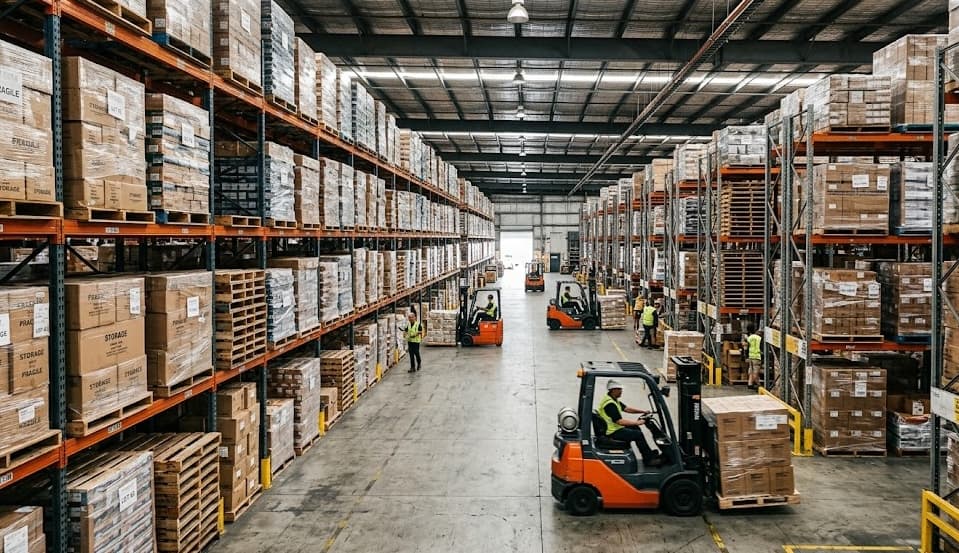
The History of the Wooden Pallet: From World War II to Modern Logistics
The humble wooden pallet revolutionized global logistics. Trace its evolution from military innovation during WWII to the backbone of modern supply chains.
Mike Reynolds
Ace Pallet Service · Published November 14, 2025
Before the Pallet: Manual Cargo Handling
Before pallets became standard, cargo was loaded and unloaded by hand, barrel by barrel, sack by sack. Dock workers spent hours manually stacking goods into ships, railcars, and trucks. This labor-intensive process was slow, expensive, and physically punishing.
The introduction of the forklift in the early 1900s created the need for a standardized platform that could be lifted and moved mechanically. Early skids, which were essentially pallets without bottom deckboards, appeared in factories during the 1920s and 1930s.
These primitive platforms were a significant improvement over manual handling, but they lacked standardization. Every manufacturer built skids to their own specifications, making interoperability between facilities difficult.
World War II: The Pallet Goes to War
World War II was the catalyst that transformed the pallet from a factory curiosity into a logistics standard. The US military needed to move unprecedented quantities of supplies across oceans and continents. Manual loading methods could not keep pace with wartime demands.
The military standardized pallet dimensions and construction specifications, enabling mass production and interchangeable use across bases, ships, and warehouses worldwide. The four-way entry pallet, which could be accessed from any side by a forklift, was a wartime innovation.
By the end of the war, the US military had produced and deployed millions of pallets. Returning servicemen brought palletization knowledge into the civilian workforce, and industries quickly recognized the efficiency gains that pallets offered.
The GMA Pallet and Industry Standardization
In 1960, the Grocery Manufacturers Association established the 48x40 inch pallet as the standard for the grocery industry. This specification, known as the GMA pallet, eventually became the dominant pallet size in North America. Its dimensions were optimized for standard trailer widths and warehouse racking.
Standardization enabled the development of automated material handling equipment designed around consistent pallet dimensions. Conveyor systems, automated storage and retrieval systems, and robotic palletizers all depend on predictable pallet sizes to function reliably.
Today, the 48x40 GMA pallet accounts for approximately 35 percent of all new pallets produced in the United States. Other common sizes serve specific industries, but the GMA standard remains the most widely recognized pallet specification in the country.
The Rise of Pallet Recycling and Repair
As pallet usage grew, so did the volume of used and damaged pallets. The pallet recycling industry emerged in the 1970s and 1980s to address the growing waste stream. Entrepreneurs recognized that repairing and reselling used pallets was both profitable and environmentally beneficial.
Today, the pallet recycling industry recovers and repairs hundreds of millions of pallets annually in the United States alone. Companies like Ace Pallet Service play a vital role in keeping usable wood in circulation and diverting waste from landfills.
The economics of pallet recycling have improved steadily as disposal costs have risen and lumber prices have increased. A recycled pallet that once sold for a fraction of new pallet cost now commands a meaningful price, reflecting the genuine value of the material and labor involved.
The Modern Pallet: Innovation Continues
Today's pallet industry continues to evolve. Plastic, metal, and composite pallets have carved out niches in pharmaceutical, food, and export applications. RFID-enabled pallets provide real-time tracking throughout the supply chain. Robotic systems are beginning to automate pallet repair and sorting.
Despite these innovations, the wooden pallet remains dominant. Wood is renewable, repairable, recyclable, and cost-effective. No alternative material matches the combination of price, performance, and sustainability that wood provides.
At Ace Pallet Service, we are proud to continue the tradition of American pallet craftsmanship. From our facility in Warren, Michigan, we supply the pallets that keep regional and national supply chains moving every day.
Tags:
Questions About This Topic?
Our team is ready to help you apply these insights to your business. Get a free consultation and quote.