E-Commerce Fulfillment and Pallet Specifications: What You Need to Know
From Amazon FBA to direct-to-consumer warehousing, e-commerce fulfillment demands specific pallet types. Learn what the major platforms require and how to avoid costly rejections.
Sarah Chen
Ace Pallet Service · Published February 12, 2026
The Rise of Pallet Standards in E-Commerce
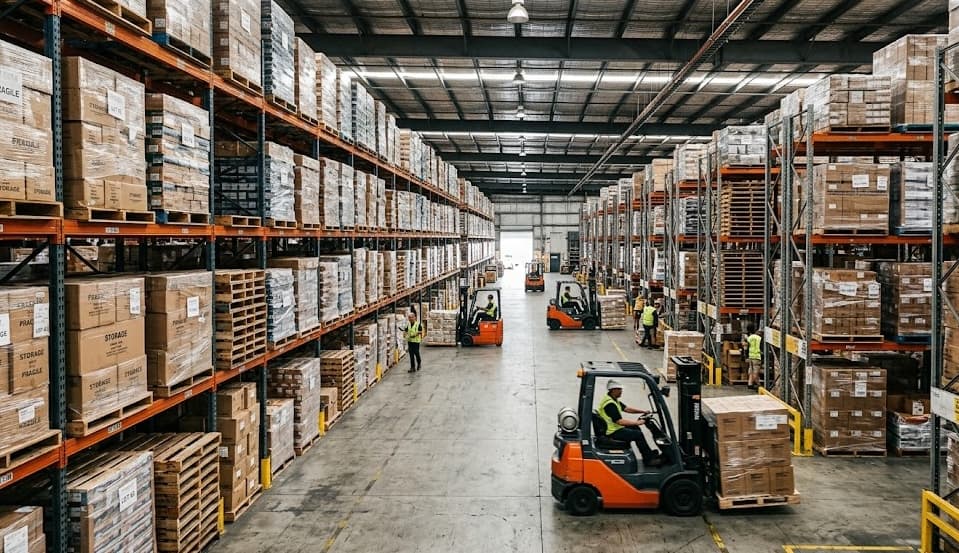
E-commerce has transformed the logistics industry, and pallet specifications have evolved to keep pace. Fulfillment centers operated by Amazon, Walmart, and other major retailers enforce strict receiving standards that dictate pallet type, condition, and dimensions. Failing to meet these standards can result in shipment rejections and costly delays.
The standard 48x40 inch GMA pallet remains the most widely accepted size in North American e-commerce fulfillment. However, acceptance criteria go far beyond dimensions. Fulfillment centers inspect for protruding nails, broken boards, contamination, and excessive moisture.
Understanding these requirements before you ship saves time and money. Whether you are a small business sending your first FBA shipment or a large manufacturer routing product through multiple fulfillment channels, pallet selection matters more than most shippers realize.
Amazon FBA Pallet Requirements
Amazon Fulfillment By Amazon centers have some of the most detailed pallet requirements in the industry. Shipments must arrive on standard 40x48 inch four-way entry pallets in good condition. Amazon specifies that pallets should not exceed 72 inches in total height and each pallet must weigh no more than 1,500 pounds for non-clamp handling.
Pallets must be free of excessive damage, meaning no broken or missing deckboards, no protruding nails or splinters, and no visible mold or contamination. Amazon reserves the right to reject entire shipments if pallets do not meet their standards.
Stretch wrapping is required on all palletized shipments to Amazon. The wrap must cover the entire load from top to bottom, and loads should be stable without leaning or shifting. Each pallet must have clearly visible shipping labels on all four sides.
Walmart and Target Fulfillment Standards
Walmart's fulfillment centers follow similar but distinct pallet standards. Walmart generally requires 48x40 inch GMA pallets with four-way entry. Their distribution centers use automated material handling systems calibrated for standard pallet dimensions, so oversized or undersized pallets cause system errors.
Target has increasingly stringent pallet requirements as they expand their fulfillment network. Both retailers require that pallets be structurally sound, free of pest damage, and clean. Contaminated or odorous pallets will be rejected.
Vendor compliance programs at these retailers include pallet condition as part of their scorecards. Poor pallet performance can result in financial penalties that accumulate over time. Investing in quality pallets upfront is significantly cheaper than absorbing chargeback fees.
Choosing Between New and Recycled Pallets for E-Commerce
New pallets offer the lowest risk of rejection at fulfillment centers. They meet all dimensional specifications, have no damage history, and present a clean appearance. For high-value shipments or first-time vendor relationships, new pallets can be worth the premium.
Recycled pallets, specifically Grade A units, offer significant cost savings while still meeting fulfillment center standards. A well-repaired Grade A pallet costs 40 to 60 percent less than a new equivalent and performs identically in terms of load capacity and equipment compatibility.
At Ace Pallet Service, we offer an e-commerce ready pallet program. Every pallet in this program is inspected to meet the receiving standards of major fulfillment centers. We check for protruding fasteners, board integrity, dimensional accuracy, and cleanliness.
Common Reasons for Pallet Rejections
The most frequent cause of pallet rejection at fulfillment centers is protruding nails or staples. Automated conveyor systems can be damaged by exposed fasteners, and workers can be injured during handling. Every pallet should be inspected for flush fasteners before loading product.
Broken or missing deckboards are the second most common rejection reason. Even a single cracked board can disqualify a pallet if the damage compromises load support. Mold and staining rank third, particularly for food-related shipments.
Dimensional inaccuracy is an often-overlooked rejection cause. Pallets that are even slightly oversized can jam automated systems. Non-standard sizes will be rejected unless specifically authorized by the facility.
Tags:
Questions About This Topic?
Our team is ready to help you apply these insights to your business. Get a free consultation and quote.