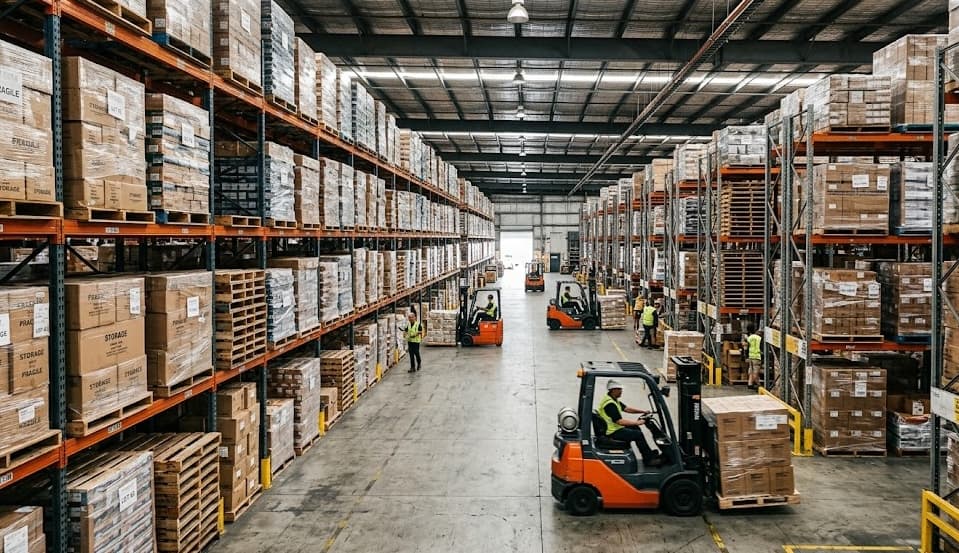
Zero-Waste Operations: How Ace Pallet Service Does It
A deep dive into how our Warren, MI facility achieves near-zero landfill waste through innovative pallet recycling, repurposing, and biomass recovery programs.
Jessica Torres
Ace Pallet Service · Published March 2, 2026
What Zero Waste Really Means in Pallet Recycling
When most people hear the term zero waste, they imagine a facility where nothing ends up in a landfill. In reality, true zero waste means diverting at least 90 percent of all material from landfill disposal, according to the Zero Waste International Alliance. At Ace Pallet Service, we consistently divert over 95 percent of incoming material.
Our Warren, Michigan facility processes thousands of pallets every week. Each pallet that arrives is assessed for its highest possible reuse value. Pallets that can be repaired are repaired, those that cannot are dismantled for usable lumber, and wood that cannot be reused is chipped for mulch, animal bedding, or biomass fuel.
The remaining fraction, primarily fasteners, dirt, and contaminated wood, accounts for less than five percent of total throughput by weight. We work with specialized recyclers to handle metal fasteners, and we are continually finding new outlets for even the most damaged wood fiber.
The Sorting and Grading Process
Every pallet that enters our yard goes through a multi-step inspection process. Trained personnel evaluate each unit for structural integrity, dimensional accuracy, and contamination. Pallets are sorted into repair-ready, dismantle-only, and grind-only categories within minutes of arrival.
Our grading standards align with industry norms established by the National Wooden Pallet and Container Association. Grade A pallets require minimal repair and re-enter service almost immediately. Grade B units may need board replacement or re-nailing. Grade C pallets are typically dismantled for parts.
Digital tracking helps us monitor material flow from intake to outbound shipment. We log the condition, dimensions, and disposition of every pallet batch, allowing us to optimize repair schedules and report accurate diversion rates to customers.
Repair and Refurbishment
Pallet repair is the single most impactful step in our zero-waste strategy. Repairing a pallet uses roughly 60 percent less energy and raw material than manufacturing a new one. Our repair line can process hundreds of pallets per shift, with skilled technicians replacing broken deckboards and re-nailing loose components.
We maintain a large inventory of reclaimed lumber specifically for repairs. When a pallet is dismantled, every salvageable board is pulled, de-nailed, and sorted by size. These boards become replacement parts for other pallets, creating a closed loop of material reuse.
Quality control is critical at this stage. Every repaired pallet is checked against the original specification before it leaves the repair line. We verify board thickness, nail placement, and overall structural soundness to ensure repaired pallets perform identically to new ones.
Wood Grinding and Biomass Recovery
Wood that cannot be reused in pallet form still has significant value. Our industrial grinder processes damaged and contaminated lumber into wood chips and sawdust. These byproducts serve multiple secondary markets, including landscaping mulch, animal bedding, and biomass energy generation.
Biomass fuel is an increasingly important outlet. Several regional power plants and industrial boilers accept clean wood chips as a renewable fuel source. By diverting wood waste to energy production, we keep material out of landfills while contributing to renewable energy.
We are selective about what enters the grinder. Painted, chemically treated, or heavily contaminated wood is separated and handled according to environmental regulations. Clean grinding stock produces higher-value byproducts, so maintaining feedstock quality is both an environmental and economic priority.
Why Zero Waste Matters for Your Business
Partnering with a zero-waste pallet supplier directly improves your company's environmental footprint. Every pallet you purchase from us represents material that has been diverted from the waste stream. For companies with ESG commitments or sustainability reporting requirements, this is a tangible, measurable contribution.
Beyond environmental benefits, zero-waste operations tend to produce cost savings that we pass on to customers. Maximizing material recovery means we extract more value from every piece of wood that enters our facility. This efficiency translates to competitive pricing on both new and recycled pallets.
If your organization is looking to reduce waste in its supply chain, pallet management is one of the easiest places to start. Contact Ace Pallet Service to learn how our zero-waste approach can support your sustainability goals while delivering the reliable pallet supply your operations depend on.
Tags:
Questions About This Topic?
Our team is ready to help you apply these insights to your business. Get a free consultation and quote.